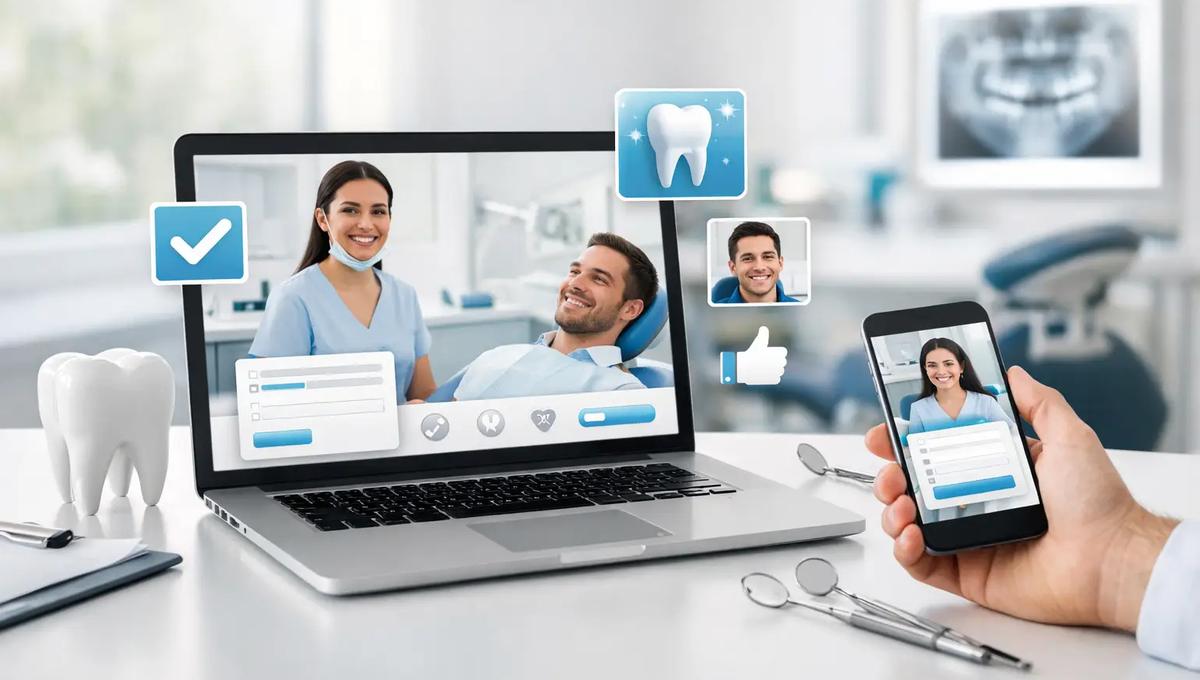
A lot of implant and cosmetic clinics do not have an ad problem. They have a landing page problem.
The ads get clicks. The targeting is decent. Search intent is strong. Then the visitor lands on a page that feels generic, slow, or vague and the consultation never happens. If you are paying for Google or Meta traffic, that gap gets expensive fast.
The best dental landing page elements are not about making a page look polished. They are about removing friction between interest and action. For elective procedures, that usually means helping a patient answer four questions quickly: Is this practice credible? Is this treatment right for me? What happens next? And how hard is it to book?
That is the standard. Everything else is secondary.
What the best dental landing page elements actually do
A strong landing page for implants or cosmetic dentistry has one job - turn paid traffic into qualified consultation calls or form submissions. Not educate a patient on every detail of dentistry. Not act like a full website. Not impress other marketers.
That means each section has to support conversion. Some pages fail because they try to say too much. Others fail because they say too little. The right balance depends on traffic source, procedure, and market competition, but the core structure stays pretty consistent.
If you are sending high-intent traffic to one page, these are the elements that matter most.
1. A headline tied to one procedure and one outcome
The headline should make it obvious that the patient is in the right place. If someone clicked an ad for dental implants, the page should not open with "Welcome to Our Practice" or "Comprehensive Dentistry for the Whole Family." That broad language kills momentum.
A better headline names the procedure and frames the result patients care about. For implants, that might be replacing missing teeth or restoring chewing confidence. For veneers, it might be improving smile appearance.
This is where a lot of clinics get too clever. Clarity beats creativity on a landing page. The visitor should understand the offer in seconds.
2. A call to action above the fold
If a patient is ready to book, they should not have to hunt for the next step.
One of the best dental landing page elements is a clear call to action at the top of the page. That can be a short form, a prominent button, or a click-to-call option on mobile. The wording matters. "Book Your Implant Consult" is stronger than "Submit." "Check My Eligibility" can work well for procedures where patients may not be sure they qualify.
The trade-off is form length. Short forms usually increase lead volume. Longer forms can improve lead quality. For most implant and cosmetic campaigns, asking for name, phone, email, and one qualifying question is enough. Add too many fields and conversion rate drops. Ask for too little and your front desk may spend more time chasing weak leads.
3. Trust signals that reduce perceived risk
Elective dentistry is a high-trust decision. Patients are not just comparing prices. They are judging clinical credibility, comfort, and whether they believe your team can deliver the result.
That is why social proof has to appear early. Reviews, star ratings, before-and-after photos, years of experience, and procedure-specific credentials all help. A general claim like "top-rated dentist" is weaker than proof tied to the service being promoted.
For example, an implant page should show implant-related outcomes. A cosmetic page should show aesthetic cases. Relevance matters more than volume. Ten believable examples beat a wall of generic praise.
4. A strong offer, if your market needs one
Not every clinic needs a discount to convert. In some markets, especially premium cosmetic cases, price-led offers can attract the wrong patient. But many landing pages still need a reason to act now.
That reason could be a free consult, free second opinion, CT scan included with evaluation, or flexible financing options. The point is not to cheapen treatment. The point is to lower the barrier to the first conversation.
This is an it-depends element. If your practice already has strong demand and premium positioning, urgency may come from limited appointment availability rather than a promotional offer. If your ads are struggling to convert cold traffic, a clear introductory offer can improve response rates.
5. Procedure-specific visuals, not stock filler
Patients can tell when a page was built from a template.
Stock photos of smiling models do almost nothing for conversion on high-value dental pages. Real visuals from the clinic are stronger - actual doctors, actual team members, actual office environment, and actual patient transformations when compliant and appropriate.
For implants, it helps to show confidence, function, and real-life outcomes rather than just close-up clinical imagery. For cosmetic pages, quality smile photography matters a lot. The image should support the buying decision, not just decorate the page.
Video can work especially well here. A short doctor-led video or patient testimonial often outperforms blocks of text because it builds trust faster. But only if it is clear and direct. A rambling brand video is usually a conversion leak.
6. A simple explanation of what happens next
A surprising number of pages ask for a lead before explaining the process.
For someone considering implants or cosmetic work, uncertainty creates hesitation. They want to know what happens after they submit the form. Will someone call them today? Is the first visit a consult or treatment? Will financing be discussed? How long does the process usually take?
A brief three-step section works well here. Something like consultation, customized treatment plan, then procedure timeline. This reduces anxiety and filters out poor-fit leads without adding unnecessary complexity.
The key is keeping it practical. Patients do not need a lecture on implant biomechanics. They need to know the path from inquiry to treatment.
7. Mobile-first speed and layout
Most clinics underestimate how much mobile experience affects lead volume.
If your page loads slowly, has tiny text, crowded sections, or a form that is annoying to complete on a phone, your cost per lead goes up. That is not a design preference. It is a direct performance issue.
A high-converting dental landing page should have fast load speed, tap-friendly buttons, short form fields, and visible calls to action as the user scrolls. Phone numbers should be clickable. Important trust signals should not be buried under oversized banners or cluttered menus.
This matters even more for Meta traffic, where users are often less patient and more likely to bounce quickly. Google search traffic can be more deliberate, but even then, friction costs conversions.
8. Financing and affordability messaging
For implants and cosmetic cases, affordability is often the silent objection.
Patients may be interested but unsure whether treatment fits their budget. If the page avoids the topic completely, some will leave before booking. That does not mean you need full pricing on every page. In fact, exact pricing can hurt if treatment varies significantly by case.
What usually works better is accessible financing language. Monthly payment options, financing availability, insurance guidance where relevant, or language that frames the consult as the first step to understanding cost. This keeps the door open without overcommitting on price.
The right level of detail depends on your positioning. A premium cosmetic brand may want softer financing language. A volume-driven implant campaign may benefit from making affordability more visible.
9. Local relevance and conversion-focused copy
Patients want to know you serve people like them, in their area, for the exact treatment they need.
That means the copy should reflect local intent and procedure intent. A page built for "dental implants in Dallas" should not read like a national brochure. Mention the city or service area naturally. Speak to the concerns tied to that treatment. Keep the copy tight and useful.
This is also where weak pages lose momentum. They use broad claims, long paragraphs, and generic statements that could apply to any dental office in any city. Precision performs better.
If your page is built for paid traffic, every section should earn its place. Navigation should be limited. Copy should move the patient toward action. And the page should answer objections before they become exits.
Why most clinics still miss the mark
The usual issue is not that clinics are missing every element. It is that they include them in the wrong order or with the wrong emphasis.
A page might have reviews, but they are buried near the bottom. It might have a form, but the headline is too broad. It might mention financing, but only after five sections of filler copy. It might look good on desktop while underperforming badly on mobile.
High-converting pages are built around intent. A patient who clicks an implant ad is closer to action than someone browsing your full website. The page should respect that. Less distraction. More relevance. More proof. Clearer next steps.
That is also why specialized campaign pages tend to outperform general service pages. They are designed to convert one audience for one offer instead of trying to serve every visitor at once.
Booked.Dental works with implant and cosmetic clinics on exactly this kind of performance-focused patient acquisition - where landing page structure is treated as part of ROI, not an afterthought.
The best landing page is not the one with the most sections. It is the one that makes the right patient feel confident enough to book now.
Ready to check if your market is available?
Pick a time to confirm whether your city is still open. Booked.Dental works with only one implant or cosmetic clinic per local market.
Check Your Market