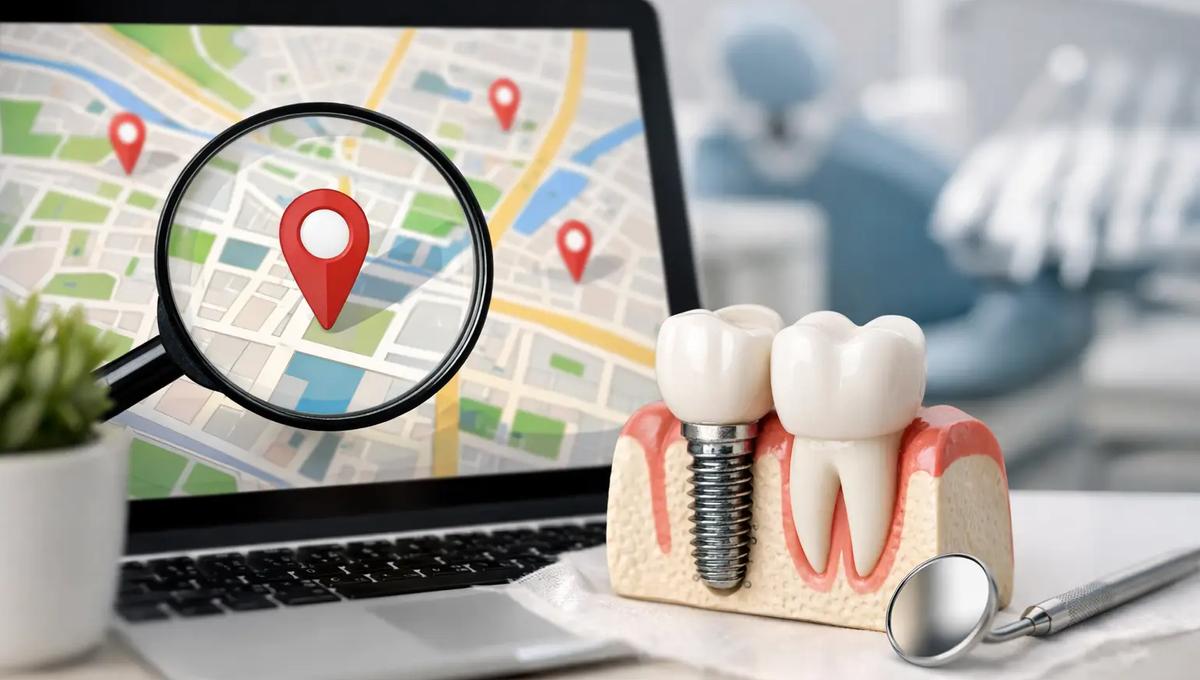
When someone searches "dental implants near me," they are not doing research for fun. They are looking for a provider, comparing options, and deciding who gets the consult call. That is why local SEO for implant dentists matters. It does not just improve visibility. It puts your practice in front of patients with intent, in your market, at the exact moment they are ready to act.
For implant clinics, local search behaves differently than general dentistry. A cleaning patient may choose the closest office with decent reviews. An implant patient is making a higher-stakes, higher-ticket decision. They are more likely to compare credentials, treatment pages, financing, reviews, before-and-after proof, and whether your office appears established in the local market. If your local presence is thin, you lose those consults to practices that look easier to trust.
What local SEO for implant dentists actually needs to do
A lot of practices treat local SEO like a generic box-checking exercise. Add the city name to a few pages, ask for reviews, and hope Google does the rest. That is not enough when a single implant case can be worth thousands.
Local SEO for implant dentists should do three things at once. It should help you rank in the local map pack, help your website rank for procedure-specific local searches, and increase conversion once the patient lands on your listing or site. Ranking without calls is useless. Traffic without consult intent is just noise.
That is why implant SEO has to be built around commercial pages, not blog fluff. If you want to attract full-arch, All-on-4, implant-supported denture, and single-tooth implant cases, your local presence has to reflect those services clearly. Google needs location signals. Patients need proof they are in the right place.
Your Google Business Profile carries more weight than most clinics realize
For many implant searches, your Google Business Profile is the first impression. Before a patient clicks your site, they are evaluating your category, reviews, photos, services, proximity, and overall credibility.
The basics still matter. Your name, address, and phone number need to be accurate and consistent. Your primary category should align with your service model, and your secondary categories should support it without muddying the signal. If your profile looks neglected, the algorithm notices and so do patients.
But for implant clinics, the real leverage comes from completeness and specificity. Your service list should include implant-related treatments. Your business description should mention implants naturally, along with the local areas you serve. Your photos should show the office, team, operatories, and real treatment environment - not generic stock-looking images that make the practice feel interchangeable.
Reviews also need to support the implant offer, not just the practice in general. Fifty reviews about friendly hygienists help less than ten detailed reviews from implant patients talking about the consultation, procedure, comfort, financing, and result. Google reads review language, and prospects do too.
The pages that move rankings and consult calls
If your implant offering lives on one thin service page, your local SEO ceiling is lower than you think.
Most implant clinics need a core implants page supported by focused treatment pages. That may include pages for dental implants, full mouth dental implants, All-on-4 or full-arch solutions, implant-supported dentures, bone grafting, and sedation if that is part of the offer. If you serve multiple nearby cities, location pages can help, but only when they are real pages with unique value. Copy-paste city pages tend to underperform and can make the whole site look weak.
Each page should do more than repeat a keyword and a city name. It should answer what the treatment is, who it is for, what the process looks like, what affects candidacy, what recovery may involve, and how patients can take the next step. Implant patients are not just asking, "Can you do this?" They are asking, "Can I trust you with a major decision?"
That is where case acceptance and SEO overlap. The stronger your page is at building confidence, the more likely traffic turns into consultation calls.
Authority in local SEO is earned through proof
Google wants to rank practices that look established and relevant. Patients want to choose practices that look credible and safe. The overlap is useful.
Before-and-after cases matter, especially if they are local and tied to the treatments you want more of. So do surgeon or provider bios that show implant experience, training, and scope of services. Financing information matters too. A surprising number of implant searches are really affordability searches in disguise.
There is a trade-off here. Some clinics load pages with every possible trust signal and end up with cluttered pages that do not convert. Others keep pages too minimal and fail to answer obvious objections. The better approach is focused proof. Show the right evidence near the right decision points.
If you have video testimonials or short-form patient stories, even better. Those assets can strengthen both local page performance and ad performance. Clinics that win consistently usually do not separate SEO assets from conversion assets. They build once and use everywhere.
Reviews are not a reputation project. They are a rankings and revenue project.
For implant practices, review generation should be systematic. Not random. Not based on whoever remembers to ask.
You want a steady flow of recent reviews, and you want more of them to mention implant treatments, smile outcomes, comfort, staff communication, and the consultation experience. That language helps reinforce relevance. It also pre-sells the next patient.
Timing matters. Asking too early gets vague reviews. Asking right after a meaningful outcome, a positive reveal, or the point when anxiety has turned into relief usually gets stronger responses. Your front desk and treatment coordinators can influence this more than most owners realize.
Replying to reviews also helps. It shows activity, professionalism, and patient care. Just keep replies compliant and practical. You do not need to write mini essays.
Citations still matter, but they are not where the real growth comes from
A lot of SEO vendors spend too much time selling directory cleanup as if that alone will drive implant cases. Citations matter because they validate your business information across the web. They support trust and consistency. But they are foundational, not transformative.
If your listings are inconsistent, fix them. If key dental and local directories are missing, add them. Then move on.
The bigger gains usually come from a stronger Google Business Profile, better treatment pages, better review signals, and stronger conversion paths. Implant dentistry is too valuable to rely on commodity SEO tasks.
Local SEO works better when you match it to search intent
Not every implant-related search has the same value. "Dentist near me" may bring broad traffic. "All-on-4 dental implants near me" is a different level of intent. So is "full mouth dental implants cost" when paired with a local modifier.
That means your local SEO strategy should reflect your actual revenue goals. If full-arch cases are the priority, build around those terms and those patient questions. If you want more single-implant cases with lower friction, the site structure and conversion flow may look different.
This is where many practices waste time. They chase overall traffic instead of procedure-level demand. More traffic sounds good in reports. More qualified consult calls is what actually matters.
SEO alone is slower than most owners want
This is the part many agencies avoid saying clearly. Local SEO is important, but it is not always fast.
If your implant practice needs consultations this month, SEO should not be your only growth channel. It compounds over time, but rankings can take months, especially in competitive metro areas. Paid search and Meta ads can create immediate lead flow while local SEO builds long-term demand capture.
That is not an argument against SEO. It is an argument for channel fit. High-intent Google ads can put you in front of implant prospects now. UGC-style Meta ads can create demand and retarget interested patients before they search again. Then your local SEO helps close the loop when they check your brand, reviews, and local credibility.
The best-performing practices usually do not force one channel to do every job.
What to watch if you want ROI, not just rankings
If you are evaluating local SEO for implant dentists, track outcomes that connect to revenue. Map pack visibility matters. Organic traffic to implant pages matters. But consultation calls, form fills, scheduled consults, show rates, and case acceptance matter more.
A page that ranks third and books consults is more valuable than a page that ranks first and attracts the wrong patient. The same goes for reviews, content, and location pages. Everything should be judged by whether it moves qualified implant opportunities.
That is the lens growth-minded owners should use. Not vanity metrics. Not bloated deliverables. Just whether local search is producing more of the cases you actually want.
If your practice is serious about implants, local SEO should make you easier to find, easier to trust, and easier to call. And if you need faster momentum while that foundation builds, pairing it with a performance-first acquisition strategy is usually the smarter move. That is the difference between being visible online and actually filling your consult calendar.
Ready to check if your market is available?
Pick a time to confirm whether your city is still open. Booked.Dental works with only one implant or cosmetic clinic per local market.
Check Your Market