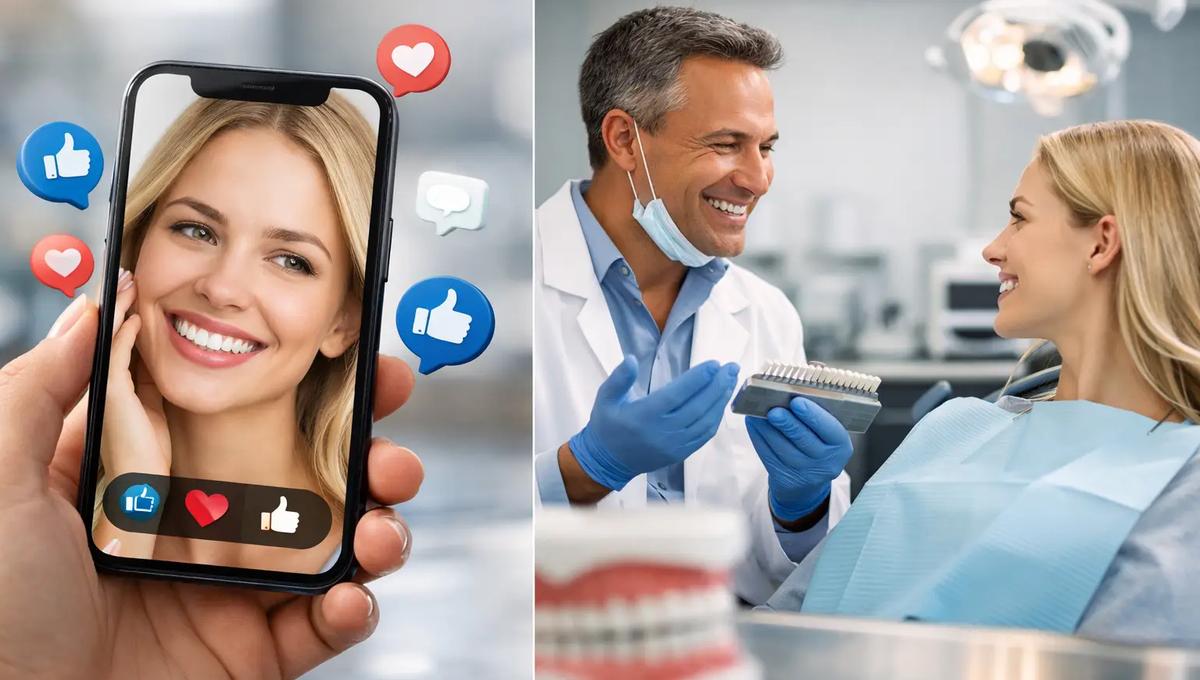
Most cosmetic dentists do not have a traffic problem. They have a conversion problem.
The market already wants veneers, smile makeovers, whitening, and Invisalign. Patients are scrolling Instagram and Facebook every day, looking at before-and-after cases, judging credibility in seconds, and deciding which practice feels worth the price. If your clinic is relying on referrals, occasional Google traffic, or generic social posting, you are leaving elective revenue on the table.
That is where meta ads for cosmetic dentists can work extremely well - but only when they are built around consult generation, not vanity metrics.
Why meta ads for cosmetic dentists work
Cosmetic dentistry is visual, emotional, and high consideration. That makes Meta a strong channel because it gives you two things at once: attention and persuasion.
Patients do not usually wake up and search for "porcelain veneers near me" the same way they search for an emergency dentist. Many cosmetic cases start earlier in the decision cycle. Someone notices their smile in photos, gets engaged, starts following cosmetic dentists, watches a patient transformation video, or sees a relatable testimonial. Meta reaches people in that stage before they ever type into Google.
That matters because the first clinic to frame the problem often shapes the shortlist.
The other reason Meta works is economics. A veneer case, larger Invisalign plan, or full smile makeover can support a much higher acquisition cost than general dentistry. If you are selling high-value treatment, you do not need hundreds of weak leads. You need a consistent flow of qualified consultation calls from patients who understand the category and can move forward financially.
What most cosmetic dental ads get wrong
A lot of clinics run Meta ads as if they are selling cheap retail offers. They boost a polished office video, show a stock-looking smile reel, and send traffic to a homepage. The result is usually predictable: low-intent leads, poor booking rates, and a team blaming the platform.
The platform is rarely the real issue.
Most underperforming campaigns fail because the message is too broad, the creative feels like an ad, or the follow-up process is slow. Cosmetic patients respond to specificity. They want to know who the treatment is for, what the outcome looks like, what makes your clinic credible, and what the next step is.
There is also a major difference between generating interest and generating consultations. Likes, comments, and video views may make the campaign look active, but they do not tell you whether the ad is producing booked cases. For a cosmetic clinic, the scoreboard is simple: qualified leads, consultation show rate, treatment acceptance, and return on ad spend.
The best Meta ad strategy for cosmetic dentists
If you want Meta to produce real cosmetic consults, the campaign has to be built backward from the revenue goal.
Start with the procedure mix. Veneers, Invisalign, whitening, bonding, and full smile makeovers do not convert the same way. Whitening can attract volume but often lower average value. Veneers and smile makeovers can produce stronger economics but require better qualification. Invisalign can sit in the middle, depending on price point and market competition.
That means your offers should not be lumped together in one generic campaign. A clinic that wants profitable cosmetic growth should usually separate its messaging by treatment type or by patient pain point. Someone embarrassed by chipped front teeth needs a different message than someone comparing Invisalign providers.
Creative is the next lever. On Meta, polished does not always beat persuasive. In many cases, UGC-style content performs better because it feels more believable in-feed. That can mean a dentist speaking directly to camera, a treatment coordinator explaining who qualifies, or a patient sharing why they finally moved forward.
Before-and-after visuals still matter, but context matters more. Show the transformation, explain the case type, set expectations, and give people a reason to take the next step now. Cosmetic patients are buying confidence, appearance, and trust. The ad should reflect that without sounding inflated.
The offer matters too. This is where many practices get cautious, and sometimes for good reason. You do not want to cheapen a premium brand with gimmicky discounts. But patients still need a reason to respond.
In practice, the strongest offers are usually structured around reducing friction, not racing to the bottom on price. A free cosmetic consultation, smile assessment, or Invisalign evaluation often works better than trying to advertise a dramatic discount. In some markets, adding simple financing language or a limited monthly availability angle can lift response rates without damaging positioning.
Landing pages and lead forms decide lead quality
Good ads can still fail if the handoff is weak.
Some cosmetic dentists send Meta traffic to a standard website service page and hope patients will call. That creates drop-off. The page should match the ad, focus on one procedure or one offer, and move the visitor toward a clear booking action.
A focused landing page should do a few things quickly. It should confirm the offer, show proof, explain who the treatment is for, and make it easy to request a consultation. Strong pages also address obvious objections like candidacy, financing, treatment timeline, and results.
Lead forms can work well on Meta, but they need filtering. If you make the form too short, you may get cheaper leads that never show. If you make it too long, volume can collapse. For cosmetic clinics, qualification questions around treatment interest, timing, and basic budget comfort can improve downstream booking rates.
This is one of those areas where it depends on the clinic. A practice with a strong front desk and fast follow-up may tolerate broader lead capture. A practice with limited admin capacity usually needs tighter qualification upfront.
Follow-up speed is part of the ad campaign
A cosmetic lead is not really a lead until someone on your team starts the conversation.
Meta creates opportunity, but your process converts it. If your clinic waits hours to call, sends one text, or treats cosmetic inquiries like routine hygiene requests, performance will suffer. The highest-converting practices move fast, confirm interest, answer basic questions, and get the patient onto the schedule while intent is still high.
That is why ad performance should be judged beyond cost per lead. A cheaper lead that never answers is more expensive than a higher-cost lead that books and shows. Cosmetic dentistry is too valuable to optimize the wrong metric.
The better way to look at Meta is cost per consultation and cost per accepted case. Once you know those numbers, budget decisions become much easier.
What realistic results look like
Meta can produce consults fast, but it is not magic.
In some markets, a strong campaign can generate first consultation opportunities within days. In others, especially premium veneer or smile makeover offers, the sales cycle can be longer because patients compare providers, ask more questions, and think harder about financing. That does not mean the campaign is weak. It means the treatment carries more consideration.
Competition also matters. A cosmetic dentist in a dense metro area may need stronger creative and sharper positioning than a practice in a less saturated market. The same goes for reputation. If your reviews, case photography, and consult experience are weak, ads will expose that faster than they solve it.
Still, when the pieces align, Meta can become a dependable patient acquisition channel. Not because it replaces every other source, but because it gives your clinic a repeatable way to create demand instead of waiting for it.
When to use Meta and when not to
Meta is especially strong when your clinic offers visually driven, elective treatments with healthy margins. It works well when you have clear before-and-after proof, a solid consultation process, and the ability to follow up quickly.
It is less effective when the offer is vague, the practice wants only ultra-low-cost leads, or the team is not prepared to handle inquiries in a sales-oriented way. Cosmetic marketing sits closer to consumer decision-making than traditional dentistry. That requires tighter messaging and stronger conversion discipline.
For many practices, Meta also works best alongside Google Ads rather than instead of Google Ads. Google captures high-intent searchers. Meta creates and captures demand earlier. If you only run one channel, you may miss part of the patient journey.
That is why specialized execution matters. Cosmetic and implant case generation is not the same as general dental marketing. The economics are different, the creative needs are different, and the qualification bar is higher. Agencies that understand that can move faster because they are optimizing for consults and case value, not just impressions.
Booked.Dental is built around that exact model - affordable, performance-focused acquisition for cosmetic and implant clinics that want qualified consultations, not generic marketing activity.
If you are considering meta ads for cosmetic dentists, the right question is not whether the platform works. It is whether your campaign is built to turn attention into booked treatment conversations. That is where the money is.
Ready to check if your market is available?
Pick a time to confirm whether your city is still open. Booked.Dental works with only one implant or cosmetic clinic per local market.
Check Your Market