Use this benchmark library to compare cost per lead, dental marketing channels, serious patient inquiries, booked consults, follow-up quality, and treatment economics before increasing spend.
המדדים הם כיווניים וצריך לאמת אותם מול השוק, ההצעה, מהירות הפולואפ וכלכלת הטיפולים של כל מרפאה.
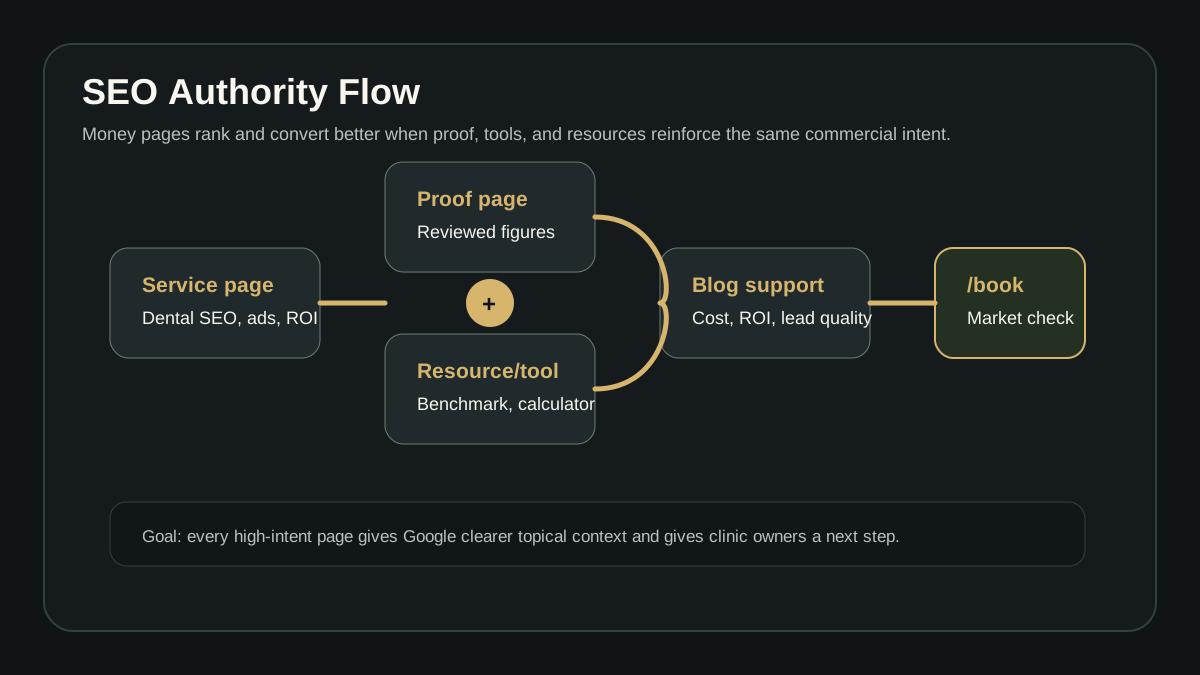
The SEO system should move authority and visitors between money pages, proof, benchmark resources, tools, and clinic-plan requests.
Start by separating cost from quality
Cost per lead is useful only after the clinic knows what kind of lead it bought. A cheap inquiry that is unreachable, outside the market, or wrong for the treatment should not be compared with a serious implant or cosmetic patient opportunity.
Start with the metric closest to revenue
Traffic, rankings, impressions, and raw leads are early signals. The benchmark that matters most is whether the page or channel creates reachable, treatment-fit conversations that can become booked consults.
Use benchmarks to find the bottleneck
A weak page may have low CTR, a weak offer may create low-quality inquiries, and a slow front desk may lose good opportunities. Compare each benchmark against the stage it is meant to diagnose.
Make the assets easy to cite
Each benchmark page includes definitions, tables, methodology, and practical next steps so a clinic owner, consultant, or partner can reference the same measurement language.
How to cite these benchmarks
When referencing this library, cite the specific benchmark page and describe it as a dental marketing measurement framework, not a market-wide average. The useful point is the decision model: raw CPL, serious inquiry cost, booked consult cost, and ROI should be separated before budget is scaled.
Where these benchmarks are most useful
The library is built for dental consultants, practice-management teams, vendors, and clinic owners who need a shared way to discuss acquisition economics without exposing private clinic data or pretending every market performs the same.
Cost and quality definitions
Term
What it means
How to use it
Cost per lead
Spend divided by raw inquiries
Use as an early diagnostic, not as ROI
Serious inquiry rate
Share of leads that are reachable, local, and treatment-fit
Use to judge channel and offer quality
Booked consult cost
Spend divided by consults that actually get scheduled
Use to compare paid and organic acquisition
Show rate
Booked consults that arrive or complete the next step
Use to find follow-up and commitment issues
Accepted treatment value
Production tied to treatment-fit inquiries
Use for ROI once enough cases have matured
Benchmark library map
Asset
Best for
Primary decision
ROI benchmarks by channel
Comparing SEO, Google Ads, Meta, landing pages, and follow-up
Where should budget move next?
Lead quality benchmark report
Separating raw leads from serious inquiries
Which leads deserve fast follow-up?
Implant cost and ROI guide
Modeling spend, booked consult cost, show rate, and case value
Can implant spend scale profitably?
Speed-to-lead benchmark report
Finding follow-up leaks after SEO or ad inquiries
Is the clinic losing good opportunities?
Google Business Profile checklist
Improving local trust and map visibility
Does local SEO convert into calls and forms?
Revenue QA lens
Question
Strong signal
Weak signal
Is the page attracting the right buyer?
Agency, cost, ROI, SEO, implant, or lead-quality queries
Broad traffic with no clear buyer need
Is the visitor path clear?
Service, proof, calculator, and clinic-plan links are visible
The page ends without a buyer next step
Can results be tied to quality?
Landing page, current page, fit score, treatment focus, and market are captured
Only sessions or rankings are visible
Citation and outreach angles
Angle
Why someone would cite it
Best supporting asset
Dental CPL is misleading
It gives agencies and consultants a cleaner way to explain why cheap forms can still waste staff time
Dental marketing cost by channel
Raw leads vs serious inquiries
It helps clinic owners compare vendors by lead quality instead of volume promises
Dental lead quality benchmark report
Speed-to-lead affects ROI
It connects marketing performance to front-desk response and booked consult outcomes
Speed-to-lead benchmark report
Implant economics need a different model
It gives high-value treatment marketers a better frame than generic dental ad benchmarks
Implant cost and ROI calculator guide
Private data policy for citations
Data type
How this library handles it
Why
Clinic names
Not published
Protects client confidentiality and avoids turning results into endorsements
Spend figures
Shown when a proof page cites a specific result
Keeps the example useful without exposing the clinic
Patient details
Never published
Patient information is not needed to explain acquisition economics
ROI claims
Shown with spend, quality, and follow-up context
Keeps the result useful without implying every market will perform the same
How should dental clinics use marketing benchmarks?
Use benchmarks to diagnose where growth is breaking: visibility, click-through rate, lead quality, follow-up, booked consults, show rate, or treatment acceptance.
Why create a benchmark library instead of more blog posts?
Benchmark assets are easier to cite, update, and use in sales conversations because they organize definitions, tables, and measurement logic in one place.
Can other dental websites cite this benchmark library?
Yes. The strongest citation is to reference the framework and definitions, such as separating raw cost per lead from serious inquiry cost and booked consult cost. Client result figures should be read with market, budget, follow-up, and treatment-value context.
Are these benchmarks public industry averages?
They are practical measurement examples and decision frameworks, not public industry averages. Each clinic should validate the numbers against its market, offer, follow-up speed, and treatment economics.