Dental Marketing ROI and Cost Per Lead Benchmarks by Channel
Dental marketing ROI only becomes useful when cost per lead is compared with serious patient inquiries, booked consults, show rate, treatment acceptance, and case value rather than clicks or raw form volume.
המדדים הם כיווניים וצריך לאמת אותם מול השוק, ההצעה, מהירות הפולואפ וכלכלת הטיפולים של כל מרפאה.
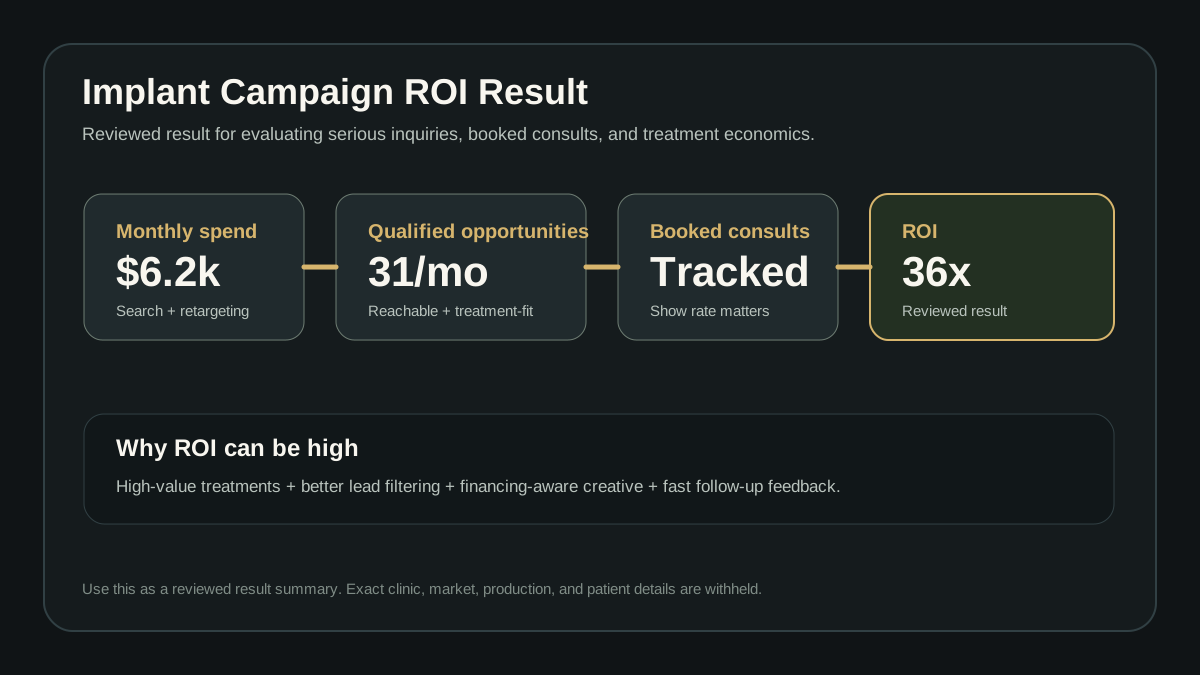
This visual summarizes the proof-page result in chart form: spend, serious implant inquiries, booked consult tracking, and ROI.
Use cost per lead as the first question, not the final answer
Dentists often search for cost per lead because it feels concrete. The better question is whether that lead can be reached, qualifies for the treatment, books a consult, shows up, and has enough case value to support the acquisition cost.
How to compare channels without fooling yourself
Google Ads, SEO, Meta Ads, and local visibility all create different kinds of demand. A channel with a higher front-end cost can still win if the patient intent, show rate, and treatment acceptance are stronger.
What should be excluded from ROI
Raw clicks, junk forms, unreachable leads, duplicate submissions, and consults that never show should not be counted as ROI. They are useful diagnostic signals, but not production.
Why high-ROI proof still needs caveats
Booked.Dental treats ROI proof as campaign-specific evidence because individual results depend on treatment value, response speed, local demand, case acceptance, and whether rejected-lead feedback is used.
For high-value implant and cosmetic clinics, a strong ROI can be many multiples of spend, but it should be measured against serious patient inquiries, booked consults, show rate, accepted treatment, and case value.
Which dental marketing channel has the best ROI?
It depends on market demand and execution. Google often has stronger immediate intent, Meta can scale proof-led demand, and SEO compounds over time when pages convert.