Most cosmetic clinics do not have a traffic problem. They have a conversion problem.
That is what makes the top cosmetic marketing mistakes so expensive. A clinic can be spending consistently on Meta ads, Google ads, content, and follow-up tools, yet still miss revenue targets because the message, offer, targeting, or intake process is off. In cosmetic dentistry, small marketing errors do not stay small for long. They show up as weak lead quality, no-show consults, inconsistent case acceptance, and wasted budget.
If your goal is more high-value cosmetic consultations, these are the mistakes worth fixing first.
Why top cosmetic marketing mistakes cost more in elective dentistry
Cosmetic cases are not commodity purchases. Patients compare providers, price shop, hesitate, and often need stronger trust before they book. That means your marketing has to do more than create awareness. It has to create intent, qualify interest, and move the patient toward a consultation with clear reason to act now.
The trade-off is simple. Broad, soft marketing may get attention, but attention alone does not fill a schedule with veneer, smile makeover, or Invisalign consults. Performance comes from matching the right message to the right patient at the right stage of decision-making.
1. Marketing the practice instead of the procedure
A lot of cosmetic clinics run ads and website copy that talk generally about the office - friendly staff, modern technology, comfortable environment, years of experience. None of that is bad. It is just not enough.
Patients looking for cosmetic work usually start with a procedure in mind. They want veneers, whitening, bonding, full smile design, or Invisalign. If the marketing stays generic, it misses the search intent and emotional motivation behind the inquiry.
Procedure-led messaging usually outperforms practice-led messaging because it meets the patient where they are. A veneer prospect wants to see veneer outcomes, veneer concerns, veneer financing context, and why your clinic is the right choice for that treatment specifically. When every service is blended into one broad message, conversion rates usually drop.
2. Using before-and-after content without enough context
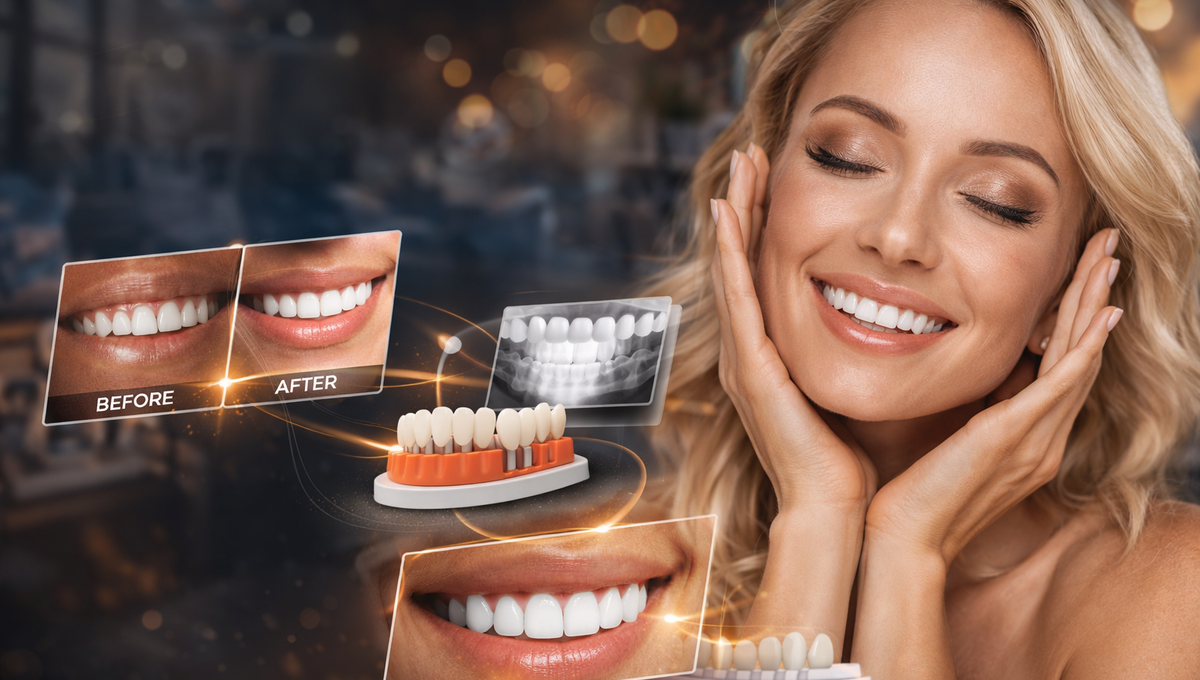
Before-and-after photos matter in cosmetic dentistry. They are often the strongest proof you have. But many clinics use them badly.
A gallery with no explanation leaves too many questions unanswered. Was this six veneers or ten? How long did treatment take? What was the patient trying to change? Was orthodontics involved? What made this case realistic for someone with a similar concern?
Strong cosmetic marketing gives proof context. It helps the patient see themselves in the result. That means pairing visuals with short, clear explanations about the concern, treatment path, timeline, and likely candidacy. More detail does not always mean more conversion, but too little detail creates doubt.
This is especially true in paid ads. A good image gets attention. A good image plus a direct hook gets consultations.
3. Targeting everyone who wants a better smile
This is one of the most common top cosmetic marketing mistakes because it feels safe. Clinics think broader targeting means more opportunity. Usually it means lower lead quality.
Cosmetic patients are not one group. Someone comparing whitening offers is very different from someone considering a full smile makeover. Their budget, urgency, objections, and booking behavior are different. Treating them as one audience usually produces weaker results across the board.
The better approach is segmentation. Separate campaigns by treatment category, price sensitivity, and intent level. Your Invisalign campaign should not sound like your veneer campaign. A patient wanting subtle alignment improvement responds to a different promise than someone trying to completely change the appearance of their teeth.
This also applies to geography and demographics. A clinic may technically serve a large area, but the highest-value cosmetic cases often come from tighter zones or more specific household profiles. Broad reach can increase lead volume. Narrower targeting often improves consult quality. Which matters more depends on your capacity and case mix.
4. Sending paid traffic to weak landing pages
A good ad cannot save a bad landing page.
Many clinics invest in media buying, then send traffic to a generic homepage or service page that was not built to convert paid visitors. The page may look polished, but if it does not answer key patient questions quickly, performance stalls.
For cosmetic campaigns, the landing page should do a few things fast. It should match the ad message, show proof, clarify the offer, reduce friction, and make the next step obvious. If a patient has to hunt for outcomes, pricing guidance, or a booking path, you lose momentum.
The biggest issue is often mismatch. The ad promises one thing, while the page talks about everything. That disconnect lowers trust immediately.
5. Measuring leads instead of qualified consultation calls
A cheap lead is not the goal. A booked and attended cosmetic consultation is closer to the goal. Accepted treatment is the real goal.
Too many clinics judge success by form fills or message volume. That can make bad marketing look good on paper. If the leads are unqualified, unreachable, or not serious about treatment, the campaign is not working no matter how low the cost per lead looks.
The right reporting lens is downstream. How many leads became consultation calls? How many showed up? How many accepted treatment? Which channel drove the best revenue, not just the most inquiries?
This matters because cosmetic dentistry has longer consideration cycles and wider variation in case value. One campaign may generate fewer total leads but far more valuable consults. Another may look efficient while feeding the front desk a pile of low-intent inquiries.
At Booked.Dental, this is why channel strategy is built around consult generation rather than vanity metrics. Cosmetic clinics need marketing that connects ad spend to production, not just activity.
6. Ignoring speed in lead follow-up
If your team responds to cosmetic leads hours later, you are already behind.
Elective patients often inquire with more than one provider. The first clinic to respond clearly and confidently has an advantage. That does not mean aggressive selling. It means fast acknowledgment, a simple booking path, and staff who know how to handle cosmetic objections.
A surprising number of campaigns fail after the lead comes in. The ads are fine. The offer is fine. The intake system is slow, inconsistent, or too passive. That is not a marketing problem in the narrow sense, but it absolutely affects marketing ROI.
This is where operational reality matters. If your front desk is stretched thin, a higher lead volume campaign may actually perform worse. Sometimes the right move is not more budget. It is tighter systems, faster follow-up, and better call handling.
7. Running brand awareness campaigns when the clinic needs cases now
There is a place for brand building. But many cosmetic clinics use brand awareness as a substitute for patient acquisition because it feels safer and less measurable.
If your schedule needs cosmetic consults in the next 30 to 60 days, broad awareness campaigns are usually too indirect. You need channels and creatives built for intent. Google ads capture active demand. UGC-style Meta ads can create demand and turn interest into inquiry when the offer and targeting are sharp.
This does not mean awareness has no value. It means the strategy has to match the business objective. A multi-location group with strong cash flow may invest in top-of-funnel visibility for long-term lift. A single-location clinic trying to grow veneer or Invisalign production usually needs direct response first.
How to fix the top cosmetic marketing mistakes without overcomplicating your stack
Most clinics do not need more platforms. They need a tighter system.
Start by choosing one or two cosmetic procedures you want to grow aggressively. Build your messaging around those services, not around the practice as a whole. Use creative that shows outcomes and explains who the treatment is for. Send traffic to a page that matches the ad. Then track what happens after the lead comes in.
From there, tighten qualification. If lead quality is weak, the answer may be in your targeting, your offer, or your intake process. If conversion from lead to consult is weak, the issue is often speed and follow-up. If consult volume is decent but treatment acceptance is poor, your marketing may be attracting the wrong patient expectations.
That is why cosmetic marketing should be judged as a pipeline, not a campaign. Every break in the chain costs revenue.
The upside is that most underperforming clinics are not far off. A few direct fixes - sharper procedure-led messaging, better proof, cleaner targeting, stronger landing pages, and faster follow-up - can change the economics fast. When your marketing is built around qualified consultation calls instead of general visibility, growth gets a lot more predictable.
The best cosmetic marketing does not try to impress other marketers. It brings the right patients into the chair, faster.
Ready to check if your market is available?
Pick a time to confirm whether your city is still open. Booked.Dental works with only one implant or cosmetic clinic per local market.
Check Your Market