Best Dental Marketing Agency for Implants?

    Reviewed for E-E-A-T signalsUpdated and reviewed: March 20, 2026
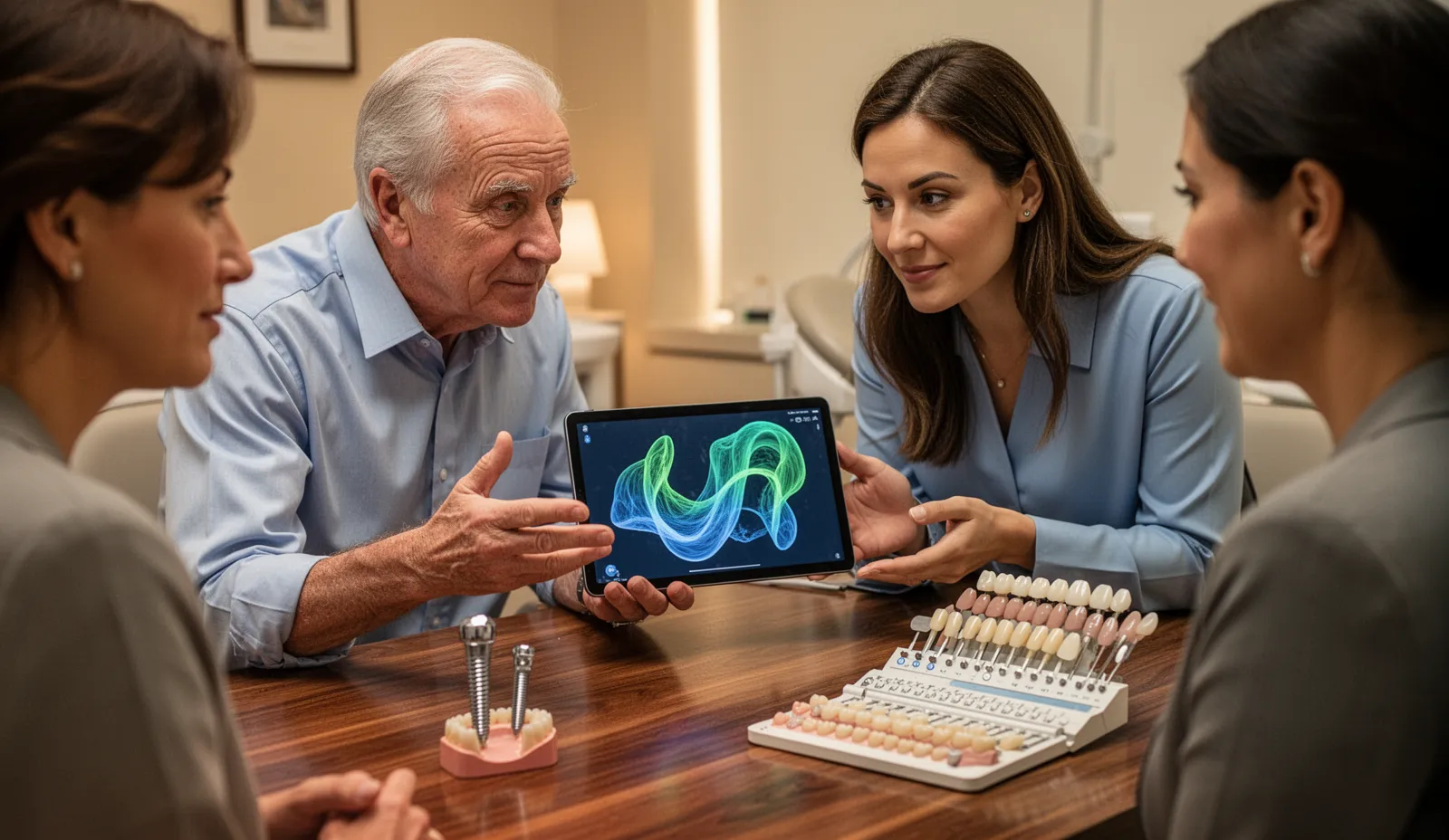
    Dentist consulting patient with dental implants model and growth charts on screen, representing successful treatment and practice growth

    If you're searching for the best dental marketing agency for implants, you're probably not looking for prettier reports or more traffic. You want qualified filtered patient opportunities for high-value cases, and you want them fast enough to matter. That changes what “best” actually means.

    Implant marketing is not general dental marketing with a different headline. The economics are different, the patient journey is longer, the lead cost is higher, and the sales process breaks if the agency does not understand treatment value, financing friction, and opportunity conversion. A clinic that wants more cleanings can survive mediocre marketing. A clinic trying to grow implant revenue usually cannot.

    What makes the best dental marketing agency for implants

    The best agency for implant case generation usually does three things well. First, it knows how to attract high-intent patients, not just unqualified leads. Second, it understands that qualified opportunities matter more than form fills. Third, it can show a direct path from ad spend to revenue.

    That sounds obvious, but many agencies still sell activity instead of outcomes. They talk about impressions, reach, engagement, and brand lift. None of that pays for a CBCT machine or a new surgeon schedule. For implant clinics, the scorecard is simpler: how many qualified opportunities came in, what they cost, how many showed up, and how many started treatment.

    Specialization matters here. An agency that works across restaurants, law firms, med spas, and dentists might know ads in a broad sense. That does not mean it knows how to position All-on-4, full-arch, overdentures, or single implant cases in a way that gets action from the right patient profile. Implant patients have different objections, different urgency, and different financial concerns.

    Why generalist agencies usually underperform

    A lot of agencies can technically run Google Ads and Meta ads. That is not the same as being effective in the implant category.

    Google Ads for implants requires tight control over intent. Broad match traffic can burn budget fast if the account is not structured around procedure-specific searches, geographic filters, and conversion actions that reflect actual patient opportunity value. If an agency optimizes for clicks instead of booked implant qualified opportunities, the campaign can look busy while producing very little revenue.

    Meta is even more sensitive to category understanding. Implant patients do not respond to generic dental branding. They respond to credibility, affordability, real patient stories, and offers that reduce hesitation. UGC-style creative often works because it feels closer to how people actually make healthcare decisions - by looking for proof, reassurance, and a reason to take the next step now.

    A generalist agency often misses that. The ads become polished but weak, the landing page sounds broad, and the leads skew low intent. Then the clinic gets stuck in a familiar cycle: too many inquiries from poor-fit patients, too few actual starts, and no clear answer about where the problem is.

    The channels that matter most for implant growth

    For most implant clinics, the most reliable acquisition engine starts with Google Ads and Meta ads. They do different jobs.

    Google captures existing demand. These are patients already searching for terms tied to implants, full-mouth restoration, missing teeth solutions, and financing options. These leads are often more direct, but they can also be more competitive and more expensive. A strong agency knows how to qualify that traffic before it wastes your budget.

    Meta creates demand and moves patients who are problem-aware but not actively searching yet. This is where good creative matters. The right ad can turn a passive prospect into a booked opportunity by making the treatment feel possible, local, and worth discussing. For elective dentistry, that combination is powerful.

    The best dental marketing agency for implants does not treat these as isolated channels. It uses them as a system. Google captures bottom-funnel demand. Meta expands the market and feeds retargeting. Landing pages and intake process do the rest.

    What to ask before hiring any implant marketing agency

    The fastest way to avoid wasted spend is to ask better questions.

    Start with what they optimize for. If the agency talks mostly about leads, ask what percentage typically turns into qualified implant qualified opportunities. A cheap lead that never shows is not cheap. It is a distraction.

    Ask how quickly they expect to generate first qualified opportunities. Implant campaigns should not take forever to validate. There can be ramp time, especially in competitive markets, but if an agency cannot explain a realistic early timeline, that is a warning sign.

    Ask what type of creative they use and why. If they rely on stock visuals and generic before-and-after messaging, expect average results. Implant patients need trust signals. They want to see outcomes, process clarity, affordability cues, and evidence that your clinic handles cases like theirs.

    Ask how they think about follow-up. This is the part many agencies ignore. Implant marketing does not end when a lead comes in. Speed to contact, contact handling, financing conversations, and opportunity scheduling discipline all affect ROI. A strong agency will acknowledge that and build around it.

    Finally, ask whether they focus on implant and cosmetic case generation specifically. If implants are just one service line among dozens they market, they are probably not as sharp as they need to be.

    The red flags that cost clinics the most

    The first red flag is vague reporting. If you cannot clearly see what was spent, how many qualified opportunities were generated, and what your cost per opportunity is, you are flying blind.

    The second is overreliance on SEO as the short-term answer. SEO has value, but it is slow and less predictable for clinics that need immediate implant case flow. If your calendar needs help now, paid acquisition should usually carry more weight.

    The third is promising volume without talking about lead quality. More opportunities are not always better. If your front desk is spending time filtering out bad fits, your marketing is creating labor, not revenue.

    The fourth is bloated retainers. Implant marketing should not require a full-service agency price tag just to launch and optimize campaigns. If the cost structure is heavy before results show up, the risk shifts too far onto the clinic.

    What good implant marketing looks like in practice

    A strong implant campaign usually starts with a specific offer and a clear audience. That might mean full-arch qualified opportunities, single implant evaluations, or implant plus financing messaging aimed at patients who have delayed treatment.

    The ad creative should make the problem and solution easy to grasp. In most markets, clinical jargon is less effective than clarity. Patients respond to messages around eating comfortably, smiling confidently, replacing failing teeth, and understanding payment options.

    The landing experience matters just as much. If the page is generic, slow, or too broad, conversion drops. A good implant landing page answers the questions that stop patients from booking: Are you local? Do you do this often? What kind of cases do you handle? Can I afford it? What happens next?

    Then comes follow-up. This is where strong campaigns either scale or stall. Even excellent ads underperform if leads wait too long for a contact back or if the scheduling script does not move them toward a patient opportunity. The best agencies know this and care about downstream performance, not just top-of-funnel numbers.

    Why affordability and speed matter more than agency size

    Big agencies often sell process. Implant clinics usually need output.

    If your practice wants to grow elective revenue, the best partner is not necessarily the biggest name or the one with the flashiest deck. It is the one that can launch quickly, keep costs sensible, and prove performance with qualified opportunity volume and ROI.

    That is why niche agencies often outperform broader firms in this category. They have seen the same objections before. They know which messages create urgency, which offers pull better, and which patient segments tend to convert into treatment. They do not need months to understand your business model.

    For many clinics, that trade-off is worth far more than a large agency's extra layers, meetings, and overhead. A focused operator with implant-specific experience can often get to revenue faster.

    Booked.Dental fits that model by focusing specifically on implant and cosmetic case generation through UGC-style Meta ads and Google Ads, with a lower entry point and a clear emphasis on first opportunity speed and measurable return.

    So who is the best fit for your clinic?

    The best dental marketing agency for implants is the one that understands high-value dental case economics and is willing to be judged by patient opportunities, not marketing theater.

    That means specialized channel strategy, strong creative, disciplined qualification, fast optimization, and reporting tied to booked opportunities. It also means being honest about trade-offs. Some markets are more competitive. Some offers convert better than others. Some clinics need intake fixes before ad spend can scale well. A real implant agency will tell you that.

    If an agency can explain how it will get qualified implant qualified opportunities, what the timeline looks like, how it measures success, and what happens after the lead comes in, you are asking the right questions. If it cannot, keep looking.

    The clinics that win implant growth are usually not doing more marketing. They are doing more of the right marketing, with a partner built for the case value they are trying to create.

    Practical takeaways

    What to do with this information

    Judge the strategy by qualified opportunities, not by raw clicks, impressions, or unfiltered lead volume.

    Connect the channel, creative, landing page, qualification result, show rate, treatment acceptance, and ROI before scaling.

    If the campaign does not teach the ad platform which prospects become real patients, budget can drift toward easy but low-quality activity.

    Clinic decision checklist

    Before increasing budget or changing channels, check that the system is measuring patient quality rather than marketing activity alone.

    • Does the prospect show intent for a high-value treatment such as implants, full-arch care, veneers, or cosmetic dentistry?
    • Is there a clear way to filter urgency, location, treatment fit, and financial fit before the team spends time?
    • Can the clinic see which campaigns produced real patient opportunities rather than only form submissions?
    • Does the content explain the next step in a way that reduces fear and increases trust?

    Frequently asked questions

    How should a clinic use this guide on Best Dental Marketing Agency for Implants??

    Use it as a decision checklist: define which treatments you want to grow, what counts as a qualified opportunity, and which metrics prove the marketing is producing real patients instead of surface-level activity.

    What is the most important metric after a lead comes in?

    Cost per lead is only an early signal. The clinic should track reachability, qualification, booked appointment rate, show rate, treatment acceptance, and ROI from closed cases.

    Should SEO, Google Ads, and Meta Ads be measured the same way?

    They should all connect back to patient quality and ROI, but they create demand differently. Google captures active searches, Meta creates demand, and SEO supports research, trust, and local authority.

    Ready to check if your market is available?

    Submit your details to confirm whether your city is still open. Booked.Dental works with only one implant or cosmetic clinic per local market.

    Check Your Market
    Booked.Dental

    Teaching ads to find patients, not clicks.

    One clinic per market

    Check Your Market