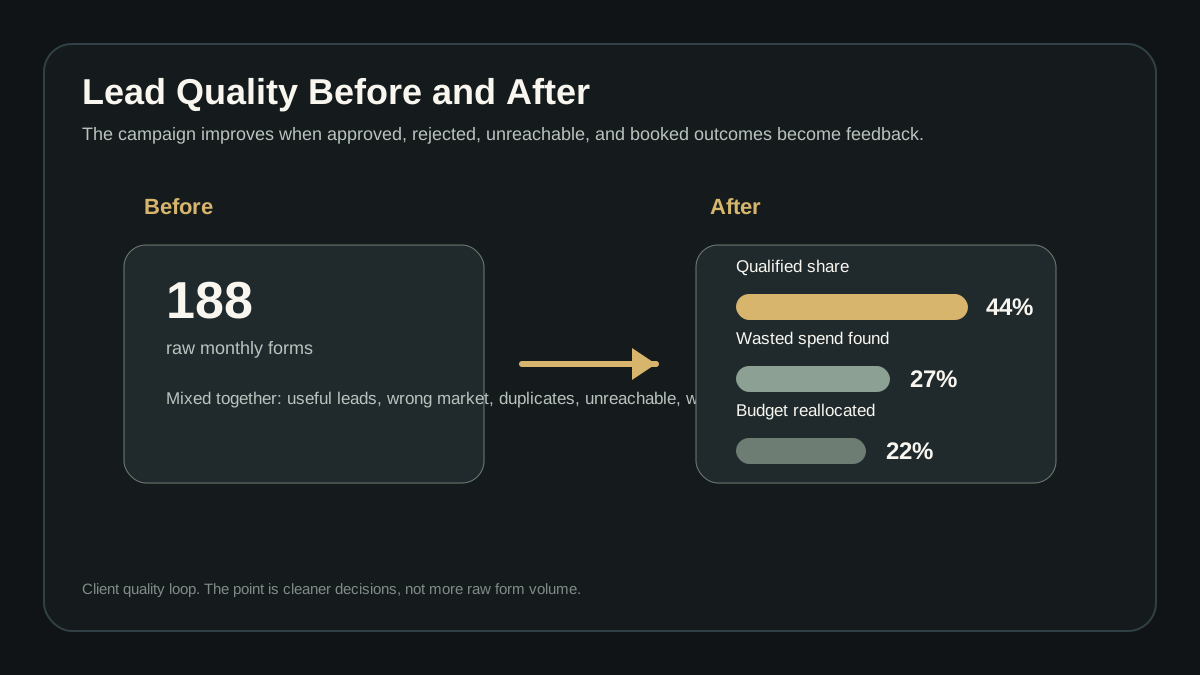
Dental Lead Quality Before and After photo context for dental growth planning.The quality loop separates raw forms from qualified, rejected, unreachable, and booked outcomes before budget decisions are made.
Clinic growth context
The clinic had several campaigns running across search, social, and organic pages. Reporting showed leads and cost, but the team could not tell which inquiries were truly useful because approved leads, rejected leads, and unreachable leads were mixed together.
What changed in the measurement
Each inquiry was tagged by treatment focus, market fit, reachability, urgency, readiness, and rejection reason. The score was intentionally simple so the front desk could use it without creating extra administrative burden.
What guided the changes
The campaign review compared source, page, search intent, ad angle, consult outcome, and rejection pattern. If a page created many low-fit inquiries, copy and internal links were adjusted before more budget was added; in this review, 27% of spend was flagged as tied to low-fit, unreachable, or outside-intent inquiries.
What shaped the result
Lead scoring only works when clinic feedback is entered consistently. If the team does not record what happened after the inquiry, the campaign can slide back into optimizing for form volume.
Lead quality before and after
Area
Before
After
Reporting
Raw form volume
Qualified, rejected, unreachable, booked
Budget decisions
CPL and impressions
serious inquiry rate and consult cost
Rejected reasons
Not consistently tracked
Used to update copy, targeting, and links
Wasted spend found
Unknown
27% flagged as weak-fit patterns
Use these result pages as examples of what to measure: spend, serious inquiries, booked consult quality, follow-up, case value, and ROI.
What this shows
A campaign moved from optimizing for raw form count to reviewing approved and rejected lead reasons by treatment, market, and follow-up result. In this result, 188 monthly forms were scored, 44% were treated as qualified, 27% of spend was flagged as waste, and 22% of budget was shifted away from sources with repeat low-fit patterns.
How we evaluate results
Booked.Dental defines serious patient inquiries as reachable inquiries with treatment intent, market fit, and enough context for meaningful follow-up. Result numbers are checked against booked consults, show rate, case acceptance, and treatment-value assumptions.
The campaign could separate targeting problems, page-promise problems, contactability problems, and follow-up problems instead of treating all leads as equal. The review found 44% of raw forms were qualified enough to guide scaling decisions.
Was this tied to SEO too?
Yes. The same feedback can show whether organic pages are attracting qualified clinic-owner or patient intent, or whether the title and opening section need to be refreshed.
What data stayed private?
Clinic name, location, exact budget, patient details, CRM exports, and revenue data are withheld to protect client confidentiality.