A dental implant marketing result showing how ROI can be judged by serious implant inquiries, booked consult economics, and case value instead of raw form fills.
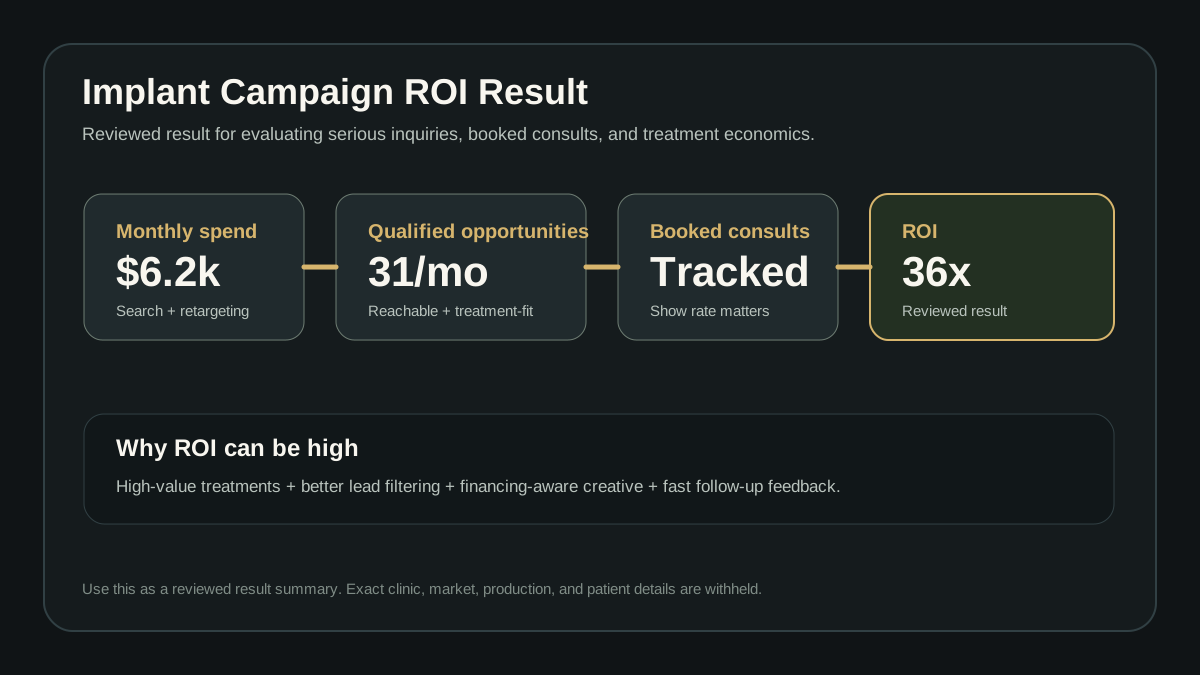
Dental Implant Marketing ROI Result: 36x ROI photo context for dental growth planning.This visual summarizes the proof-page result in chart form: spend, serious implant inquiries, booked consult tracking, and ROI.
Clinic growth context
The clinic was an implant-focused general practice in a suburban metro with existing case capacity, a front desk that could call new inquiries quickly, and enough monthly budget to separate search demand from retargeting. The main constraint was not total lead volume; it was inconsistent lead quality and unclear ROI reporting.
What changed in the campaign
The page was rewritten around implant consultation intent, financing expectations, and treatment readiness. Google Ads captured high-intent searches while Meta retargeting reinforced proof and education. The form asked only enough to flag location, treatment interest, contactability, and basic readiness, leaving borderline patients for a human follow-up.
What guided the changes
The clinic tracked serious implant inquiries, reachable rate, booked consults, no-show notes, treatment-fit objections, and rejected-lead reasons. The result separated $6.2k in monthly spend from the estimated value of booked implant consults, so budget decisions were made from ROI and consult quality rather than raw form count alone.
How to verify this in your clinic
A clinic should compare raw CPL with serious inquiry cost, booked consult cost, show-rate notes, accepted-case value, and rejected-lead reasons before scaling. If those numbers are not available yet, the first step is a clinic plan that reviews local implant demand, competitive pressure, budget, and the follow-up loop needed to judge whether the economics are realistic.
How to read the numbers
The useful numbers are monthly spend, serious implant inquiries, cost per serious inquiry, and ROI. A clinic should compare those figures with its own case value, capacity, market competition, and follow-up speed before setting expectations.
Implant ROI result
Signal
Result used
Why it mattered
Monthly spend
$6.2k
Large enough to separate channel quality from random variance
serious patient inquiries
31/mo
Filtered for treatment intent, market fit, and reachability
Cost per serious inquiry
$200
A better scaling signal than raw CPL
Booked consult tracking
Tracked by source
Separated real consult opportunities from form volume
ROI
36x
Calculated from accepted-case value against media spend
Raw lead cost vs consult economics
Decision point
What to compare
Scaling signal
Raw CPL
Every form or call divided by spend
Useful only as an early warning signal
serious inquiry cost
Reachable, in-market implant opportunities divided by spend
Better signal for whether targeting and creative are working
Booked consult cost
Booked implant consults divided by spend
Shows whether the page and follow-up process can turn demand into appointments
ROI
Accepted-case value compared with media spend
Only meaningful after rejected, duplicate, unreachable, and no-show patterns are checked
What was excluded from ROI
Excluded item
Reason
Raw clicks
Clicks do not prove treatment intent or clinic fit
Junk forms
Spam, duplicates, and wrong-market submissions were treated as waste
Unreachable leads
No contact means no consult opportunity
No-show consults
Useful for diagnosis, but not counted as production
Use these result pages as examples of what to measure: spend, serious inquiries, booked consult quality, follow-up, case value, and ROI.
What this shows
An implant campaign used search intent, lead filtering, retargeting, financing-aware creative, and follow-up feedback to separate patients researching implant options from weak form fills. In the campaign window, it produced 31 serious implant inquiries per month, a $200 cost per serious inquiry, booked-consult tracking by source, and 36x ROI after estimated implant case value was compared with media spend.
How we evaluate results
Booked.Dental defines serious patient inquiries as reachable inquiries with treatment intent, market fit, and enough context for meaningful follow-up. Result numbers are checked against booked consults, show rate, case acceptance, and treatment-value assumptions.
How should this ROI be compared to another clinic?
Compare the 36x result with your own case value, close rate, show rate, treatment mix, market competition, and follow-up speed. The same spend can perform very differently when those inputs change.
What made a lead qualified in this result?
A serious implant inquiry was reachable, in the market, interested in implant treatment, and had enough context for the team to attempt a meaningful consult booking.
Was the goal to lower cost per lead?
No. Cost per lead was checked, but the practical goal was more useful consult conversations and fewer clearly poor-fit inquiries reaching the team.
How can a clinic verify this ROI in its own market?
Start with a clinic plan, then track raw CPL, serious inquiry cost, booked consult cost, show rate, accepted cases, and rejected-lead reasons by source. The same spend level can perform very differently depending on local competition, case value, follow-up speed, and financing fit.
How should a clinic read the 36x implant ROI result?
It is one implant campaign figure. Every clinic still needs its own market, case economics, capacity, and follow-up process checked before expectations are set.