Use this playbook as the operating map for implant growth. It connects demand capture, proof, landing pages, lead filtering, financing conversations, coordinator follow-up, and weekly reporting into one system.
Benchmarks are planning ranges and should be validated against each clinic's market, offer, follow-up speed, and treatment economics.
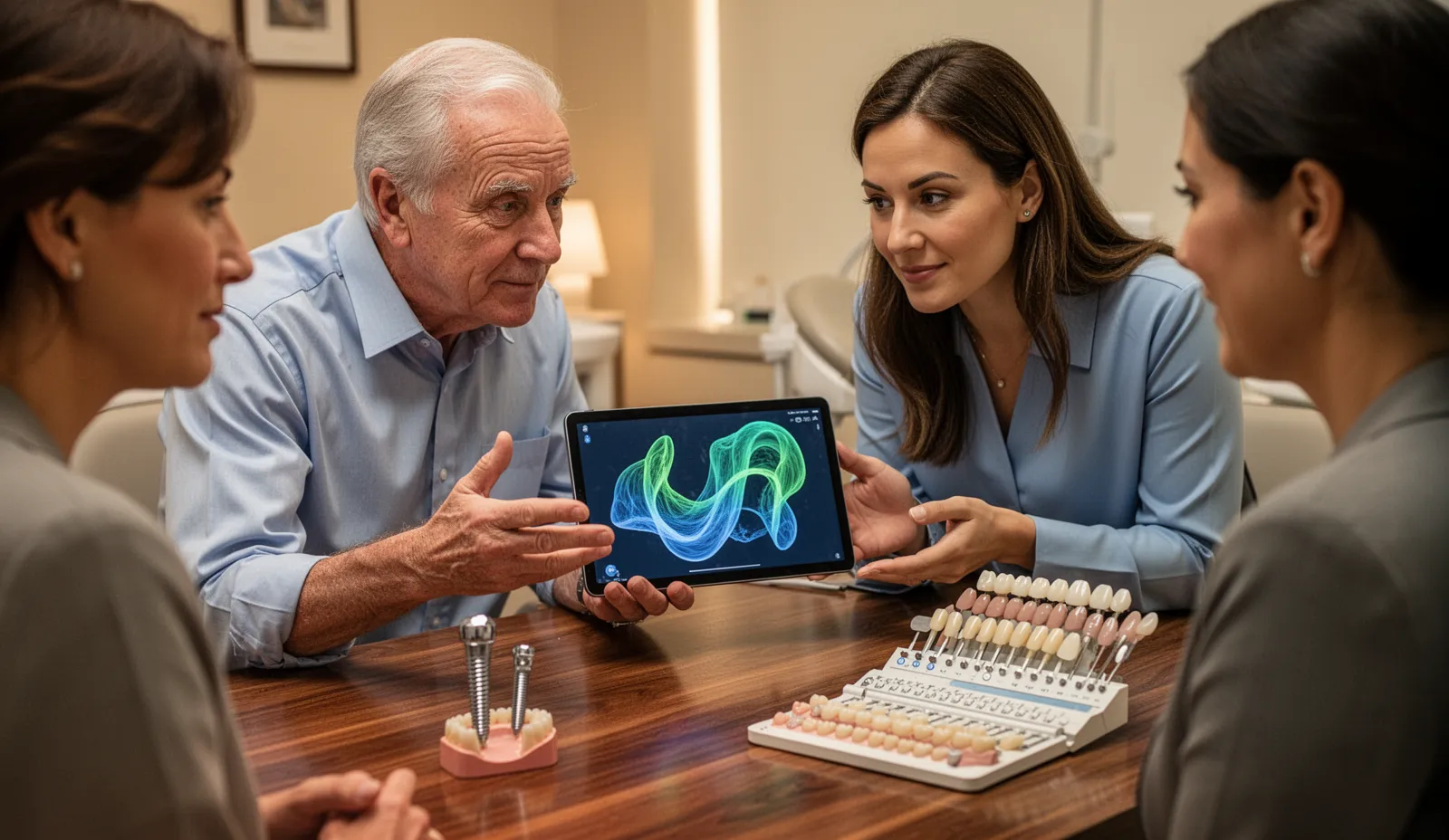
Implant Patient Acquisition Playbook photo context for dental marketing planning.
Step 1: define the right implant opportunity
Separate single implant, multiple implant, denture replacement, failing teeth, All-on-4, full-arch, financing, and second-opinion demand. Each patient situation needs different proof, page copy, and follow-up.
Step 2: build the acquisition stack
Use Google Ads for active searches, SEO and GBP for local trust, Meta for education and retargeting, proof pages for confidence, and lead filtering so the team prioritizes consult-ready opportunities.
Step 3: protect the handoff
The coordinator should know the patient's treatment context, location, timing, financing question, and next-step readiness before the first call feels generic.
Step 4: review weekly
Every week, compare spend, serious patient inquiries, booked consults, show rate, rejected reasons, accepted cases, and one improvement to ads, pages, proof, or follow-up.
How to use this week
This page is meant to help an implant or veneer clinic make one concrete improvement, not just read another marketing article.
Pick one treatment goal for the week: implant consults, full-arch consults, veneer cases, or better follow-up quality.
Assign one owner for the action: doctor, coordinator, front desk, marketing lead, or clinic owner.
Review the result in the next weekly meeting by serious inquiries, booked consults, show rate, accepted cases, or rejected reasons.
Start by defining serious patient inquiry criteria, then audit search terms, proof, landing pages, follow-up speed, and booked consult cost before scaling spend.
What makes this different from lead generation?
Lead generation counts form fills. This playbook connects traffic to serious patient inquiries, coordinator handling, booked consults, show rate, accepted treatment, and ROI.
How often should the implant system be reviewed?
Weekly. The clinic should make one practical decision each week: budget, creative, search terms, proof, page copy, or follow-up.