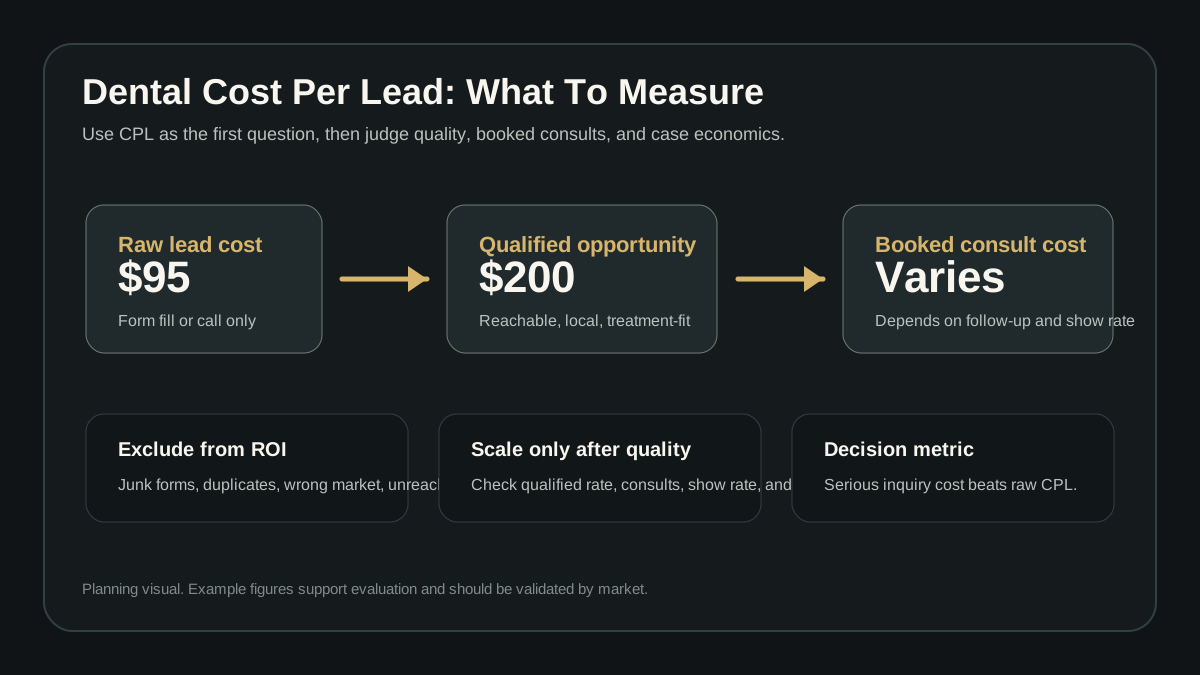
Dental marketing cost is only useful when it is tied to the type of patient opportunity each channel can create, the treatment value behind that opportunity, and what happens after the lead arrives.
Benchmarks are planning ranges and should be validated against each clinic's market, offer, follow-up speed, and treatment economics.
Dental Marketing Cost by Channel photo context for dental marketing planning.Cost per lead is only the first number. The decision point is whether leads become serious patient inquiries and booked consults.
Channel costs are not interchangeable
SEO, Google Ads, Meta, creative, landing pages, and follow-up each do a different job. A cheap channel can still be expensive if it produces weak-fit inquiries, and an expensive channel can be profitable if it produces serious implant, full-arch, veneer, or cosmetic dentistry opportunities.
Cost per lead is the starting metric
Cost per lead tells you what it costs to create a form fill or call. Serious inquiry cost tells you whether that person was reachable, local, treatment-fit, financially plausible, and ready enough for the team to spend time. The second number is usually the number clinic owners actually need.
Google Ads benchmark logic
Google Ads usually captures existing demand. It can cost more per raw lead because the patient is already searching for a dentist, implant treatment, veneers, or pricing. Judge it by qualified calls, booked evaluations, show rate, accepted treatment, and search-term waste.
Meta Ads benchmark logic
Meta Ads usually creates demand. It can generate cheaper leads, but quality depends heavily on creative, offer clarity, financing framing, form questions, and follow-up speed. Judge it by qualified rate and downstream revenue, not by the lowest possible CPL.
SEO and Google Business Profile benchmark logic
SEO and Google Business Profile work more slowly, but they can reduce blended acquisition cost when local pages, treatment pages, reviews, and proof compound. Judge organic by qualified organic calls and forms, not by rankings or traffic alone.
The real comparison
Compare serious inquiry cost, booked consult cost, show rate, and accepted treatment instead of only comparing cost per click or form fill. For high-value dentistry, a smaller number of better-fit inquiries can outperform a larger pile of cheap leads.
Budget and tracking next move
Want the practical numbers check for your clinic?
Send the clinic-owner version: whether the next issue is budget size, channel noise, weak tracking, or accepted-case economics.
The cheapest raw lead source is not always the best. High-value clinics should judge cost by serious patient inquiries and accepted treatment value.
What is a good dental cost per lead?
A good dental CPL depends on treatment value, market competition, and lead quality. For implants and cosmetic dentistry, serious inquiry cost and accepted treatment value matter more than raw cost per form fill.
Should SEO and ads be measured together?
Yes. Google Ads, Meta Ads, SEO, and Google Business Profile should all roll into the same patient-quality view so the clinic can see which sources produce booked consults and revenue.