
Free expert help for dental marketing problems

    Practical answers for implant and veneer clinics trying to improve lead quality, consult booking, follow-up, proof, tracking, Google Ads, Meta Ads, and local market strategy.

    No patient details
    Private intake
    Actionable answers
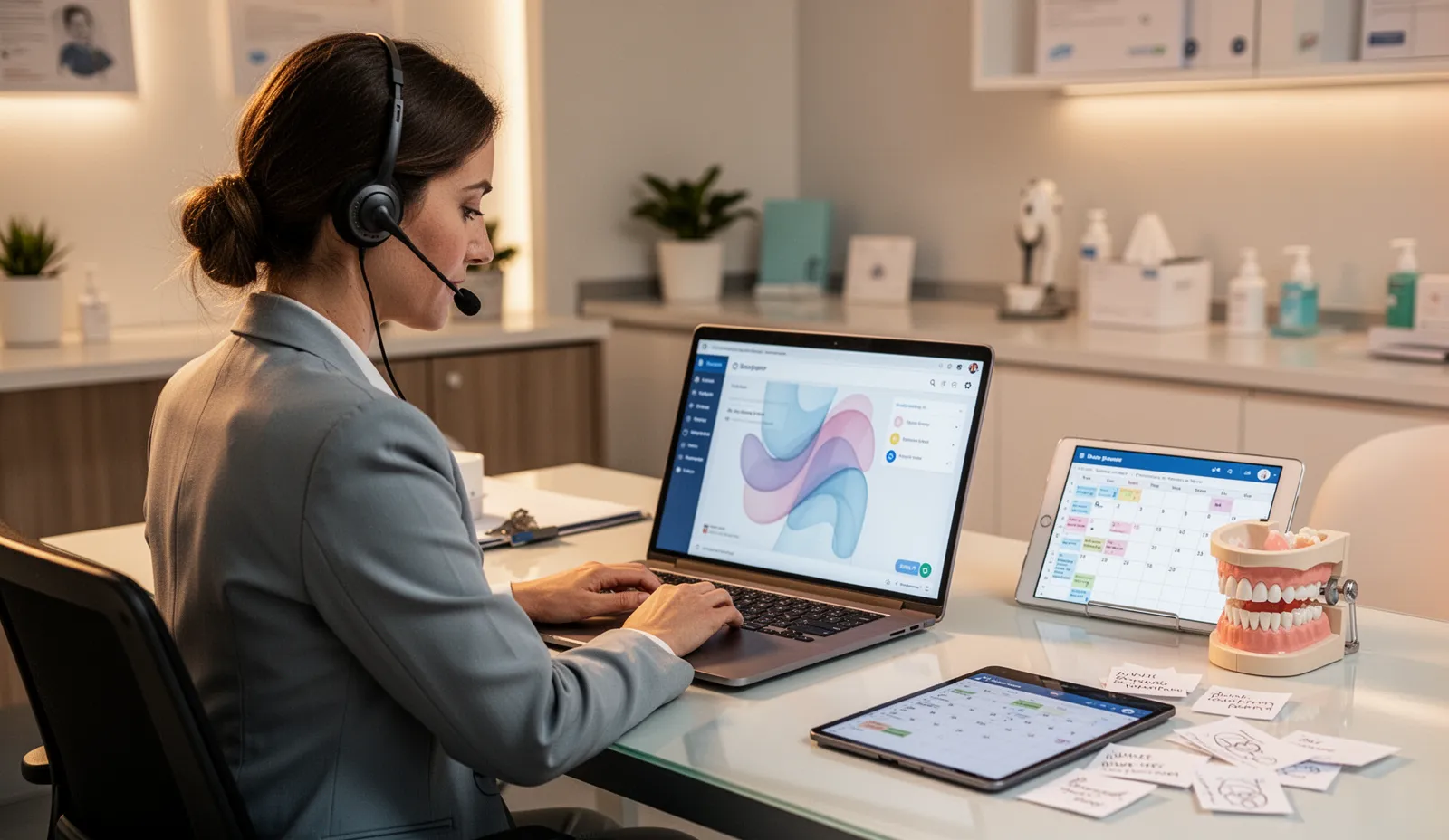
    Dental patient acquisition operations scene with coordinator workflow, treatment notes, and clinic dashboard
    Dental expert-help workflow for clinic owners, coordinators, and marketing leads.

    Ask a clinic-specific question

    Send the real situation. It goes privately to Booked.Dental, and any public answer is edited to remove clinic details.

    Submissions go privately to Booked.Dental. Do not include patient names or protected health information.

    Clear answers to common clinic problems

    These are written for owners, treatment coordinators, and marketers who need the next practical move.

    Implants

    What should we say when implant leads ask for cost before records or a consult?

    Ask similar

    Short answer

    Do not dodge the question, but do not turn the first conversation into a blind quote. Explain that implant cost depends on diagnosis, bone, number of teeth, sedation, and whether the patient needs single-tooth, multi-tooth, or full-arch treatment.

    Why it happens

    Patients ask about cost early because they are trying to understand risk. If the team gives a number too quickly, the patient compares it against incomplete offers from other clinics and the consult loses its value.

    What to do next

    Acknowledge cost directly: 'Cost matters, and we will talk about it clearly.'
    Name what changes the plan: bone, number of teeth, timeline, materials, and whether a denture or full arch is involved.
    Move to the next useful step: a consult or second opinion where the clinic can explain realistic options and financing.

    Avoid this

    Avoid quoting a generic implant price before the patient understands what treatment category they are actually in.

    Veneers

    Why do our veneer ads create price shoppers instead of serious cosmetic consults?

    Ask similar

    Short answer

    Most veneer price-shopping starts in the ad and landing page. If the creative leads with generic smile promises, discounts, or vague before-and-after imagery, people learn to ask 'how much?' before they understand design, fit, materials, or doctor style.

    Why it happens

    Veneers are elective and aesthetic. Patients compare taste, trust, natural-looking results, and price at the same time. Weak positioning makes the offer feel interchangeable.

    What to do next

    Lead with the cosmetic problem and desired outcome, not just a pretty smile image.
    Show planning proof: smile design, shade discussion, case selection, temporaries, and realistic expectations.
    Use a light-fit question before the consult so the team can separate premium-fit patients from casual curiosity.

    Avoid this

    Avoid broad discount language unless the clinic is intentionally competing on price.

    Google Ads

    How often should we review implant Google Ads search terms?

    Ask similar

    Short answer

    Review search terms weekly while the campaign is learning. The point is not just to add negatives; it is to understand which searches become reachable, treatment-fit opportunities and which searches create low-fit calls or forms.

    Why it happens

    Implant campaigns can spend heavily on terms that look relevant but attract research-stage, bargain, emergency, or wrong-treatment traffic. The campaign needs clinic feedback to learn what is actually valuable.

    What to do next

    Keep terms that produce reachable implant, denture, second-opinion, or full-arch conversations.
    Exclude terms that repeatedly create irrelevant, impossible-fit, or clearly non-treatment traffic.
    Rewrite landing-page sections when the term is valuable but the page fails to answer financing, candidacy, fear, or timeline.

    Avoid this

    Avoid judging a search term only by cost per lead. A cheaper term can still waste coordinator time.

    Follow-up

    Our full-arch consults book, but too many patients no-show. What should change?

    Ask similar

    Short answer

    No-shows are usually a handoff problem, not just a lead-quality problem. The patient needs to know why the consult is worth attending, what will happen during the visit, and that the clinic understands their situation.

    Why it happens

    Full-arch patients often feel fear, embarrassment, price anxiety, or uncertainty about whether they are candidates. A calendar confirmation alone does not resolve those objections.

    What to do next

    Confirm the reason for the visit in the patient's own words.
    Send one relevant proof asset before the appointment: doctor explanation, financing context, denture replacement story, or second-opinion framing.
    Use a same-day recovery text or call if the patient misses the consult.

    Avoid this

    Avoid sending generic appointment reminders with no treatment context.

    Tracking

    What should we track after the consult so marketing learns from accepted cases?

    Ask similar

    Short answer

    Track the path from source to accepted treatment. If reporting stops at lead count or booked consults, the clinic cannot tell which campaigns create real treatment value.

    Why it happens

    Marketing platforms optimize toward the conversions they can see. High-value dentistry needs clinic-side outcomes: show rate, accepted cases, treatment value, and rejected reasons.

    What to do next

    Log source, campaign or page, treatment interest, qualified status, booked consult, showed consult, accepted case, accepted value, and rejection reason.
    Separate implants, full arch, veneers, and general cosmetic inquiries instead of blending them into one average.
    Review rejection reasons weekly so ads, pages, proof, and follow-up can improve.

    Avoid this

    Avoid scaling a source just because it produces the most forms.

    Meta Ads

    What doctor videos actually help implant and veneer campaigns?

    Ask similar

    Short answer

    Record short videos that answer the questions patients are nervous to ask. The best videos do not sound like ads; they make the doctor feel specific, calm, and clinically credible.

    Why it happens

    For implants and veneers, patients are buying trust before they buy treatment. Generic lifestyle creative can attract attention, but doctor proof helps qualified patients move toward a consult.

    What to do next

    For implants, answer candidacy, bone loss, dentures, full-arch options, timeline, financing, and second opinions.
    For veneers, answer natural-looking results, case selection, shade, smile design, maintenance, and who is not a good fit.
    Use clips in ads, landing pages, and follow-up so proof supports the whole journey.

    Avoid this

    Avoid scripted hype. A clear 45-second explanation usually beats a polished but vague promo.

    Want this applied to your market?

    Booked.Dental can review your local market, procedure focus, follow-up, proof, and tracking so the next step is specific to your clinic.

    Get My Clinic Plan