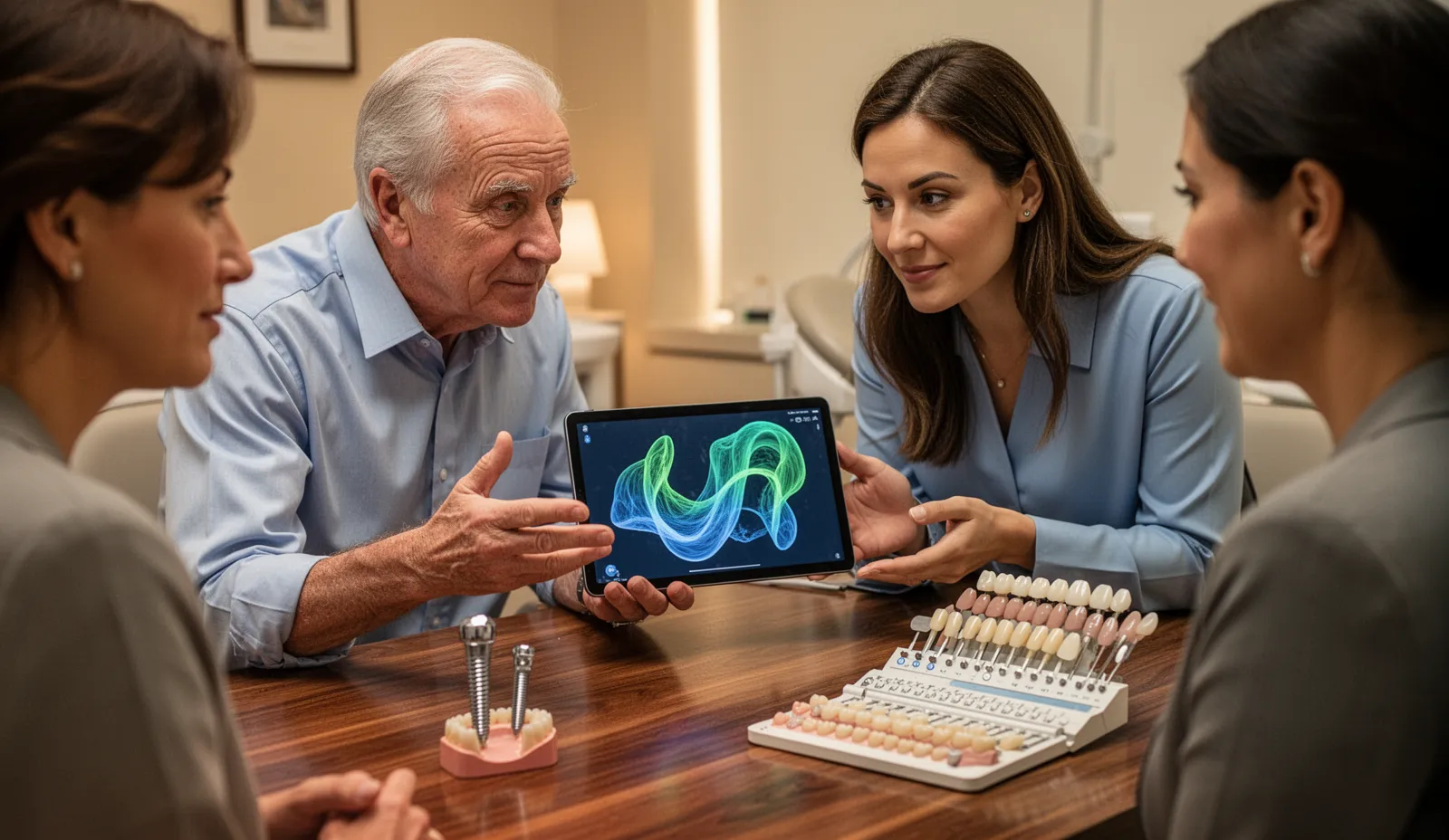
Full-Arch Google Ads Result photo context for dental growth planning.
Clinic growth context
The practice was competing in a dense metro where multiple implant centers and DSOs were bidding on similar searches. The clinic had full-arch capability, but its ads and landing page were attracting a mix of serious patients, single-tooth implant shoppers, and low-budget price comparisons.
What changed in the campaign
Ad groups were separated by intent, the page made the full-arch consultation path clearer, and copy set expectations around candidacy, financing, and what happens after the first inquiry. The form stayed short, but it made treatment category and readiness easier to read.
What guided the changes
The review looked at search term quality, form notes, call outcomes, booked consults, and rejection reasons. Queries that created cheap but weak leads were treated differently from queries that produced reachable full-arch conversations, especially when case value could support a higher cost per serious consult.
What shaped the result
In markets with aggressive competition, full-arch economics depend heavily on close rate, consultation process, follow-up speed, and whether the clinic can handle high-intent inquiries quickly.
Full-arch search campaign review
Signal
Result used
Decision use
Search spend
$8.8k
Checked if high-intent search could support full-arch economics
Qualified share
41%
Separated serious full-arch interest from broad implant searches
Booked consult rate
22%
Measured landing page plus follow-up quality
ROI
36x
Calculated only after consult quality was checked
Use these result pages as examples of what to measure: spend, serious inquiries, booked consult quality, follow-up, case value, and ROI.
What this shows
A full-arch search campaign was judged beyond cost per lead by checking whether inquiries understood the treatment category, likely financing context, and consultation next step. After intent separation, lead filtering, and stronger full-arch creative, the campaign showed 11 serious full-arch consult opportunities per month, a $42k case value used for ROI modeling, and 36x ROI.
How we evaluate results
Booked.Dental defines serious patient inquiries as reachable inquiries with treatment intent, market fit, and enough context for meaningful follow-up. Result numbers are checked against booked consults, show rate, case acceptance, and treatment-value assumptions.
The campaign was mixing full-arch candidates with broader implant shoppers, which made lead volume look better than the actual consult opportunity quality. The fix reduced clearly weak-fit inquiries by 36% in the campaign window.
Did the page reject patients automatically?
No. The page added context and light qualification, then left uncertain but potentially viable patients for a human conversation.
Why remove the exact market?
The exact city and competitors are withheld so the clinic cannot be identified from spend patterns, auction context, or treatment positioning.