
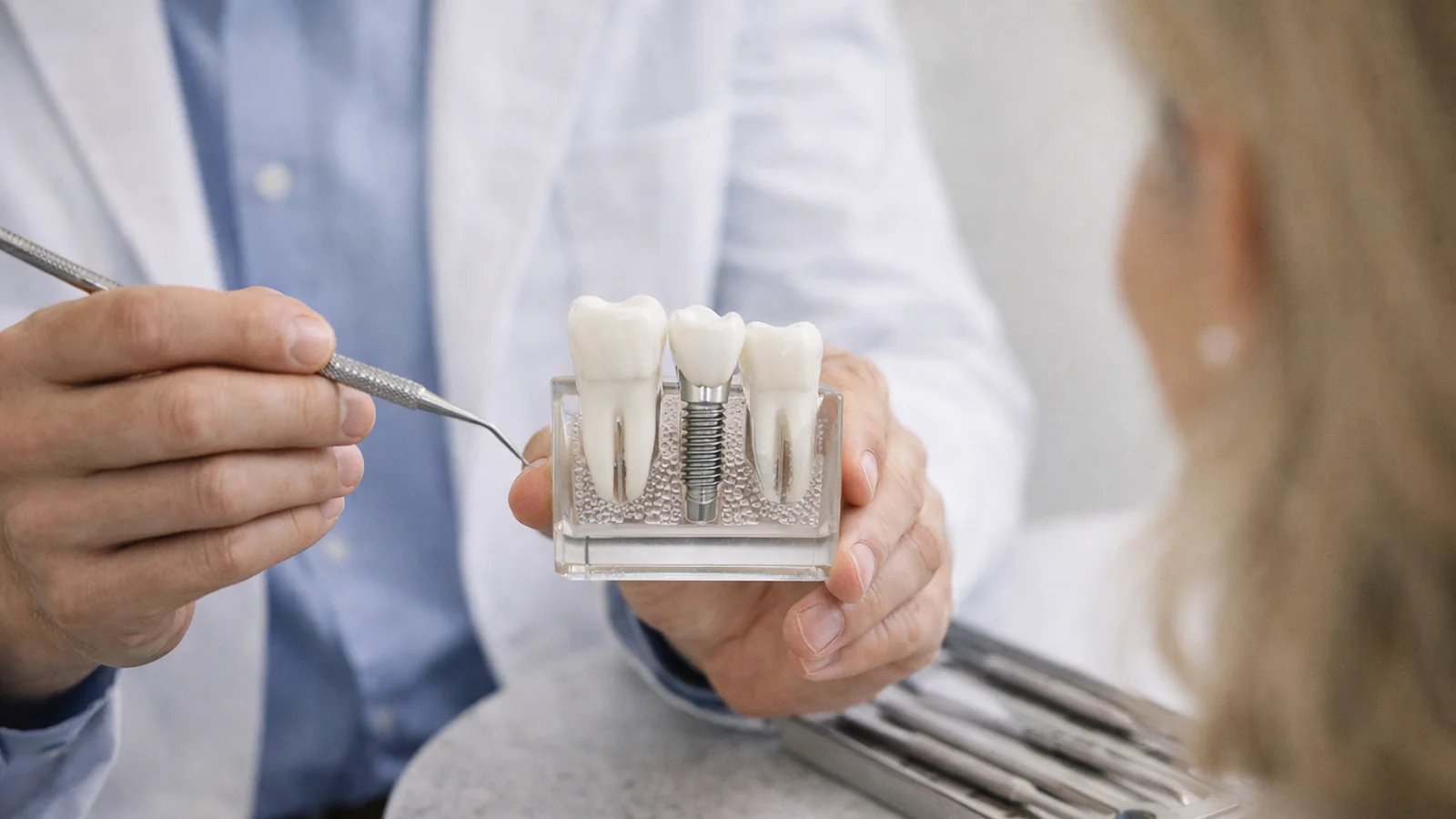
Dental implant warranty marketing speaks to a real patient concern: if someone is considering a major investment, they want to know what happens after treatment. The message should build confidence without turning the treatment into a simple guarantee.
Patients want to understand long-term value
Implant patients often compare clinics by price, materials, reviews, doctor experience, and perceived safety. A warranty or long-term protection message can help, but only if it explains what is covered, what depends on maintenance, and why ongoing care matters.
This kind of content works best when it avoids vague promises. Patients should understand that implant success depends on diagnosis, planning, home care, hygiene visits, health factors, and following the clinic's instructions.
Use confidence messaging to filter better prospects
A patient who cares about long-term value may be more serious than someone who only asks for the lowest price. Campaigns can use this signal by asking about treatment goals, comparison stage, budget readiness, and what matters most in choosing a clinic.
When the clinic tracks which value-focused inquiries become serious patient inquiries, the AI gets a better signal. The campaign can move toward people who care about treatment fit and confidence, not only quick discounts.
Dental implant warranty marketing FAQ
Should implant clinics advertise a warranty? Only if the clinic truly offers one and can explain the terms clearly. Vague warranty claims can create trust problems.
What should warranty messaging include? Explain coverage, limits, maintenance expectations, follow-up care, and what the patient is responsible for.
Can warranty messaging improve lead quality? It can, because it attracts patients who are thinking about long-term value rather than only immediate price.
Want the implant-specific next move for your clinic?
Send the practical clinic version: which page, proof, follow-up, or budget issue is most likely blocking serious implant consults.
Practical takeaways
What to do with this information
Judge the strategy by serious patient inquiries, not by raw clicks, impressions, or unfiltered lead volume.
Connect the channel, creative, landing page, qualification result, show rate, treatment acceptance, and ROI before scaling.
If the campaign does not teach the ad platform which prospects become real patients, budget can drift toward easy but low-quality activity.
Clinic decision checklist
Before increasing budget or changing channels, check that the system is measuring patient quality rather than marketing activity alone.
- Does the prospect show intent for a high-value treatment such as implants, full-arch care, veneers, or cosmetic dentistry?
- Is there a clear way to filter urgency, location, treatment fit, and financial fit before the team spends time?
- Can the clinic see which campaigns produced real patient opportunities rather than only form submissions?
- Does the content explain the next step in a way that reduces fear and increases trust?
Next step
Turn this into a clinic growth check
Use the most relevant service, proof example, and calculator below to decide whether this strategy fits your clinic's market.
Dental Implant Marketing
Get a free clinic plan for dental implant marketing: see the SEO, ad, website proof, follow-up, and consult-tracking fixes to prioritize next.
ProofDental Implant Marketing ROI Result: 36x ROI
See a dental implant marketing ROI result with $6.2k monthly spend, 31 serious implant inquiries, booked-consult economics, and 36x ROI.
ResourceBest Dental Marketing Agency for Implants
How implant clinics should evaluate dental marketing agencies by proof, filtering, creative, tracking, and full-arch economics.
ToolImplant Marketing ROI Calculator
Estimate implant campaign ROI from ad spend, serious patient inquiries, show rate, close rate, and average case value.
Ready for a clinic plan tied to your page?
Start with the page patients see, then add market, treatment focus, budget, follow-up, and tracking context.
Get My Clinic Plan